














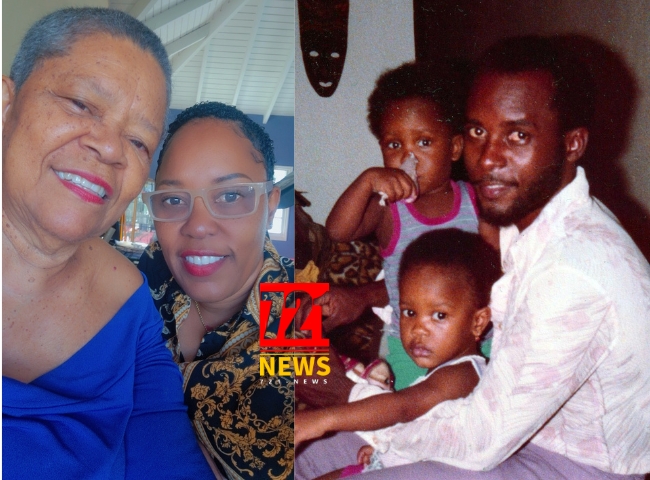
Great Bay, St. Maarten – “Check on the person who is always checking on everyone else.”
That is the simple but powerful call from community advocate Nzinga Lake, who is hoping to spark a community movement around an often-overlooked reality, the emotional and practical weight carried by people caring for aging, ill or dependent loved ones.
Lake calls the movement “Who Checks on Us?”
“For the past two years, my siblings and I have been privately caring for our aging parents, and this journey has changed me,” Lake said. “My parents are not dying; they are aging, and I thank God that they are still here. But as our loved ones age, roles begin to change. Once, they carried us. Now, for many of us, it is our turn to help carry them.”
Lake said the experience has made her think deeply about the caregivers who quietly show up every day, often while balancing jobs, families, financial responsibilities and their own personal struggles.
“Everyone asks, ‘How is Mommy?’ ‘How is Daddy?’ ‘How is Auntie?’ And of course they should. But I started thinking: who asks the caregiver, ‘How are YOU?’”
For Lake, caregiving is not only about aging parents.
It is the niece caring for the aunt who helped raise her. The nephew caring for an uncle. A grandchild caring for a grandparent. A husband caring for his wife. A wife caring for her husband. Siblings caring for each other. Friends caring for friends. Sometimes it is a neighbor who simply saw someone in need and stepped up.
Others are caring for loved ones living with Dementia or Alzheimer’s disease, Cancer, the effects of Stroke, Parkinson’s disease, disabilities, chronic illnesses and other conditions requiring ongoing support.
“Sometimes the caregiver isn’t the person anyone expected to take on the responsibility,” Lake said. “They are simply the person who showed up and kept showing up. I want those people to know that we see them too.”
Lake also spoke about the emotional side of watching someone you love change.
“Sometimes you miss parts of someone who is still right there beside you,” she said. “You remember their independence, their strength and the things they once did so easily. You can grieve those changes while still being incredibly grateful that they are here.”
Lake said her own support has often come from friends who are also caregivers.
“We call each other. We ask for guidance. We pray. We vent. We cry. We laugh because sometimes you really have to laugh. And we listen. Those check-ins have helped me tremendously.”
She has even kept a journal of things she has learned along the way from cleaning and useful products to practical routines. But one lesson stands above all others.
Patience.
“Caregiving teaches you patience with the person you love, patience with the situation and sometimes, most importantly, grace and patience with yourself.”
Lake has a particular message for caregivers who may be quietly exhausted.
“You are seen. You are valued. You are loved. What you do matters. Being tired does not mean you love the person less. Feeling overwhelmed does not make you ungrateful. Sometimes you need advice. Sometimes you need prayer. Sometimes you need to cry, laugh or vent. And sometimes you simply need a hug.”
She is also calling on siblings and extended family members to share the care.
“Please don’t let the person who always steps up become the person everyone simply expects to carry everything,” Lake said. “If someone in your family is carrying most of the responsibility, ask what you can do. Take an appointment. Bring a meal. Run an errand. Give them a few hours to breathe. Even if you live abroad, there may be something you can take responsibility for.”
Lake acknowledged the important work already being done by healthcare professionals, Government, churches, foundations and community organizations, stressing that Who Checks on Us? is intended to complement not compete with existing efforts.
“This isn’t Government’s responsibility alone. This belongs to all of us,” Lake said. “Families, friends, neighbors, employers, businesses, churches, organizations and Government all have a role. But checking in doesn’t require a programme or a budget.”
Sometimes it is a telephone call. Sometimes it is a listening ear. Sometimes it is prayer. Sometimes it is an hour of help. And sometimes it is simply a hug.
“A hug doesn’t take away what the caregiver has to face when they go back through the door,” Lake said. “But sometimes it says, ‘I see you. You don’t have to explain.’ And that can give someone enough strength to keep going.”
Nzinga hopes Who Checks on Us? will grow into a community culture rather than simply another campaign.
“This is my calling to encourage us to check in. Caregivers checking on caregivers. Families checking on each other. Friends checking on friends. A community remembering the people quietly carrying the care.”
My first goal is remarkably simple. “If one person reads this today, thinks of a caregiver they haven’t checked on in a while, picks up the phone and asks, ‘How are YOU?’, I will feel that we have already moved something toward change.”
“Because change doesn’t always begin with hundreds of people. Sometimes it begins with one person checking on one person. “Once, they carried us. Now, many of us are helping to carry them. While we carry them, let us carry each other.
“WHO CHECKS ON US? WE DO” said Lake