


















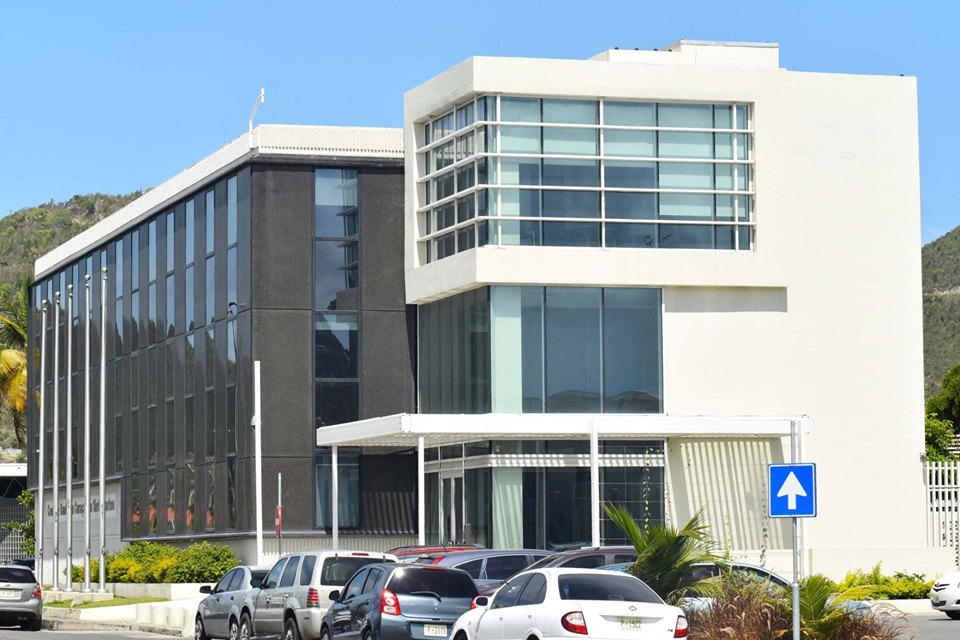



WILLEMSTAD/PHILIPSBURG – Both Curaçao and Sint Maarten continue to demonstrate resilience, supported primarily by tourism activity and ongoing private investment. The main challenge facing the monetary union is no longer recovery but sustaining growth and strengthening resilience in an increasingly uncertain external environment. The planned phased withdrawal of funds held by the Dutch State at the Centrale Bank van Curaçao en Sint Maarten (CBCS) will reduce gross official reserves, while import coverage is projected to remain above the three-month benchmark. These are among the key findings of the CBCS Economic Bulletin of September 2026.
Safeguarding external stability through sound policies
A key priority remains safeguarding external stability. In small and highly open economies, confidence in the peg depends on adequate foreign exchange reserves, effective monitoring of capital flows, and a regulatory framework that balances openness with discipline and prudence. “The reforms implemented in 2024, including the higher threshold for foreign exchange licenses and a more risk-based approach, show that modernization and liberalization can coexist with effective supervision,” explained Ference Lamp, the new President of the CBCS.
Against this backdrop, the planned repatriation of funds held by the Dutch State at the CBCS deserves careful attention. For several years, principal and interest payments made by the governments of Curaçao and Sint Maarten to the Dutch State accumulated in accounts held at the CBCS. As these funds were not withdrawn, they contributed to the monetary union’s gross official reserves and import coverage. The phased repatriation will therefore reduce the external buffer available to absorb future shocks, although import coverage is projected to remain above the three-month benchmark. “This underscores the importance of policies that help contain the current account deficit, enhance fiscal resilience, and strengthen the monetary union’s capacity to generate foreign exchange,” noted Lamp.
Broadening the foundations for resilient and inclusive growth
According to Lamp, diversifying the economies also remains essential to reduce vulnerability to external shocks. “Tourism will remain the main driver of growth in Curaçao and Sint Maarten, and continued investment in the sector is important to sustain foreign exchange earnings, employment, and related business activity. However, further tourism development should also go
hand in hand with investment in other sectors of the economy, so that spillovers are strengthened and a broader share of households and businesses can benefit from growth,” explained Lamp. Tourism Satellite Accounts (TSAs) play an important role in this regard by providing a clearer view of tourism’s contribution across sectors. At the same time, more thorough research is needed to identify how value added of tourism can be increased and more effectively captured, and how leakages can be reduced. “Preserving macroeconomic stability will require enhancing domestic linkages and retaining more value added locally, broadening the foundations of growth, strengthening buffers, and ensuring that a larger share of the population benefits from economic expansion,” Lamp emphasized.
Curaçao should furthermore continue exploring opportunities in renewable energy to reduce its dependence on oil imports, as well as potential oil and bunkering, and other marine-related services that could arise from a gradual normalization of relations with Venezuela. For Sint Maarten, strengthening disaster-risk financing, improving climate resilience, and ensuring that tourism growth is matched by adequate infrastructure and public services remain critical priorities.
Strengthening domestic revenue mobilization is also important for building fiscal buffers in times of economic prosperity. Recent developments in consumption-based tax revenues suggest that compliance initiatives can support revenue collection, while the weaker performance of wage tax revenues points to the need for more targeted measures related to payroll reporting and undeclared employment.
“More broadly, both countries should continue improving the investment climate through concrete measures that reduce administrative burdens, improve access to finance for small and medium-sized enterprises, and better align education and training programs with labor-market needs,” Lamp stated. Public investment should be prioritized toward projects with clear economic returns, including infrastructure projects that strengthen transport and logistics capacity, climate resilience, energy security, and export potential. At the same time, attracting foreign direct investment that supports productive capacity, export earnings, and external competitiveness without adding to the public debt burden will be essential.
“Ultimately, the challenge is to translate the current economic momentum into lasting improvements in productivity, competitiveness, and living standards while strengthening resilience to future shocks. By investing in productive capacity and creating the conditions for businesses and people to thrive, Curaçao and Sint Maarten can convert emerging opportunities into sustainable and inclusive growth,” concluded Lamp.
The complete text of the September 2026 Economic Bulletin is available on the CBCS website at https://www.centralbank.cw/publications/economic-bulletins/2026