


















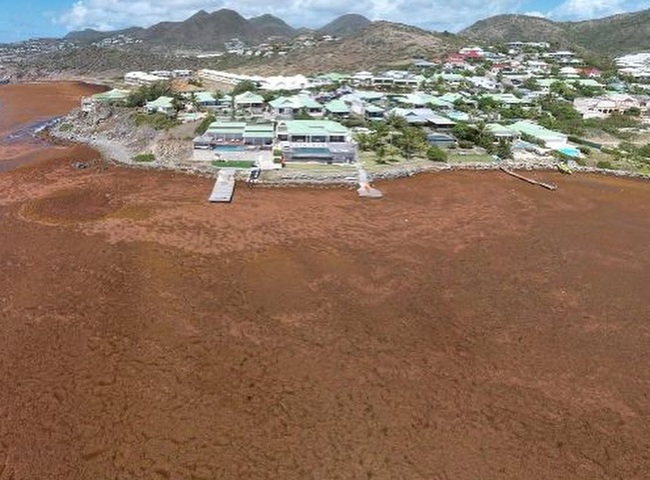



GREAT BAY, Sint Maarten (DCOMM) – The Collective Prevention Services (CPS), a department within the Ministry of Public Health, Social Development and Labor (VSA), is advising residents and visitors to take appropriate health precautions following the arrival of large quantities of seasonal Sargassum seaweed along several coastal areas of Sint Maarten.
Sargassum is a naturally occurring brown seaweed that floats on the surface of the Atlantic Ocean and Caribbean Sea. While it plays an important ecological role in the open ocean by providing habitat for marine life, excessive amounts washing ashore have become increasingly common throughout the Caribbean over the past decade.
Once Sargassum accumulates along the shoreline, it begins to decompose, releasing hydrogen sulphide gas. This colourless gas has a distinctive odour often compared to rotten eggs. In high concentrations or with prolonged exposure, hydrogen sulphide can pose health risks, particularly for individuals living or spending extended periods near affected beaches.
Exposure may result in irritation of the eyes, nose and throat, headaches, dizziness, nausea, coughing, and breathing difficulties. Persons with asthma, chronic obstructive pulmonary disease (COPD), allergies, or other respiratory conditions may experience worsening of their symptoms. Those most vulnerable include older adults, infants and young children, pregnant women, and individuals with underlying heart or lung conditions.
Residents living in coastal communities where Sargassum is actively decomposing are encouraged to keep doors and windows closed whenever possible, particularly when strong onshore winds carry the odour inland. If available, the use of air conditioning with clean filters or air purifiers equipped with HEPA filters may help reduce indoor exposure to airborne irritants.
CPS also recommends limiting the amount of time spent on beaches experiencing heavy accumulations of decomposing seaweed.
Swimming is discouraged in areas where large quantities of decomposing Sargassum are present, as decaying organic material can reduce water quality, decrease oxygen levels near the shoreline, and conceal debris or marine organisms beneath the seaweed. Beachgoers are encouraged to seek alternative beaches that are free of significant Sargassum accumulation.
Pet owners should also exercise caution. Dogs and other animals can be affected by inhaling hydrogen sulphide gas, and pets should be prevented from playing in or ingesting decomposing seaweed, which may cause illness.
Individuals who experience persistent headaches, difficulty breathing, severe eye irritation, chest discomfort, nausea, or any worsening of existing respiratory conditions after exposure to Sargassum should seek medical attention promptly. Persons who rely on prescribed inhalers or other respiratory medications should ensure they have an adequate supply readily available.
Protecting public health is a shared responsibility. By taking simple preventive measures and remaining aware of changing coastal conditions, residents and visitors can reduce potential health risks while enjoying Sint Maarten’s beaches safely throughout the Sargassum season.
For additional health information or guidance, members of the public may contact CPS by calling 914 or call 721-542-3003, 542-1570.