



















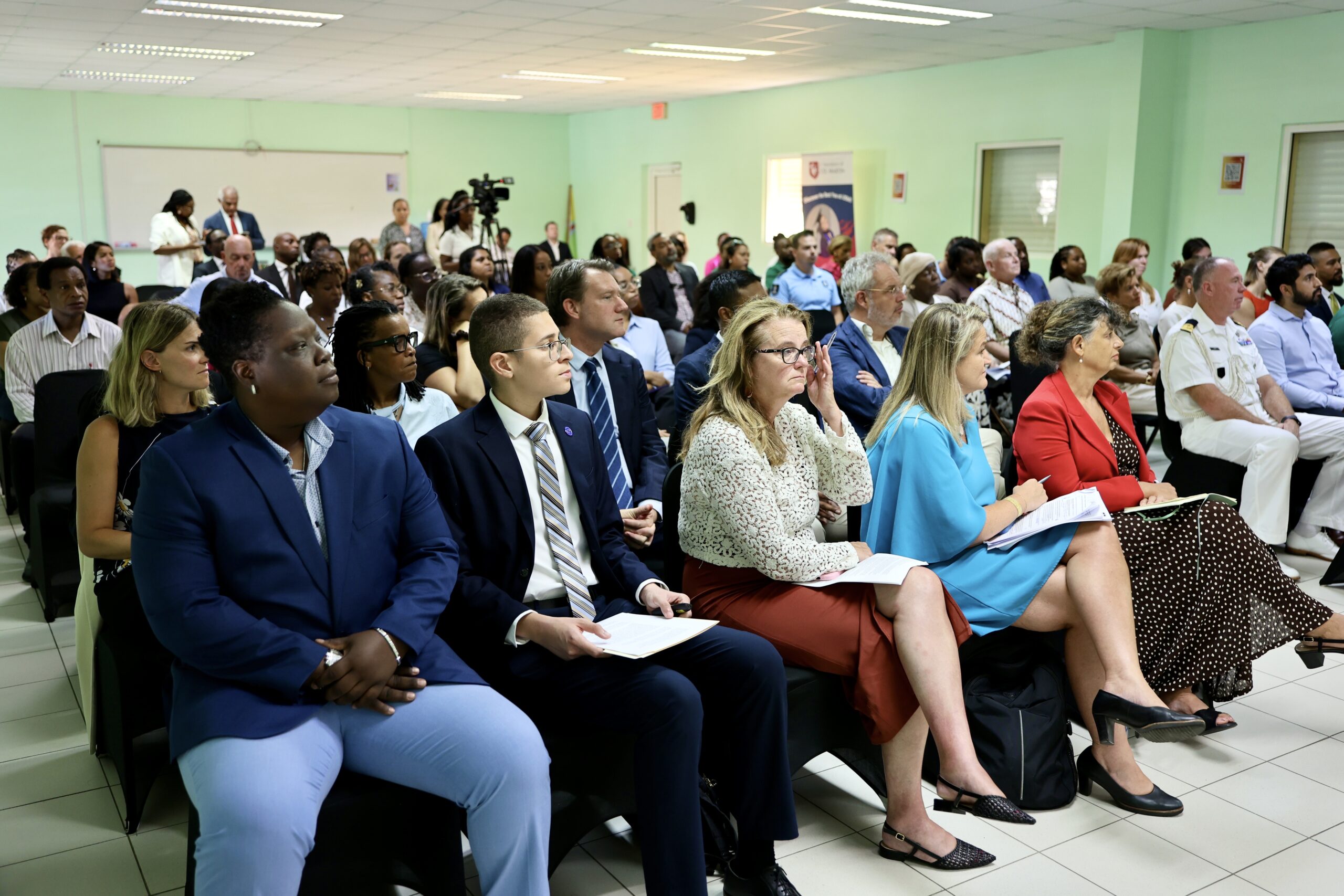



PHILIPSBURG, Sint Maarten – The Ministry of Justice, together with the Council of Europe, hosted Sint Maarten’s first Human Rights Conference on Friday, October 9, bringing together representatives of the Council of Europe, Parliament, government, justice institutions, legal professionals, civil society, students and members of the community.
Held one day before Sint Maarten’s 16th anniversary as a country, the conference created a platform for discussion on human rights, the mechanisms established to protect them, and what those protections mean in practice for Sint Maarten. The conference also comes ahead of the Kingdom of the Netherlands’ Presidency of the Council of Europe’s Committee of Ministers, which will run from May to November 2027.
In her keynote address, Minister of Justice Nathalie Tackling centered her message on the responsibility that comes with state authority and the importance of governments being willing to confront shortcomings and correct them.
“On 10 October 2010 we gained authority over our own affairs, and with it the obligation that comes with any authority: to answer for how it is used,” Minister Tackling stated. “Sixteen years is long enough that we can no longer describe our shortcomings as the growing pains of a young country. They are now ours, and so is the work of fixing them.”
The conference marks an important development in Sint Maarten’s relationship with the Council of Europe following years of international scrutiny surrounding conditions within the country’s detention system. In 2018, the European Court of Human Rights found a violation of the European Convention on Human Rights arising from detention conditions in Sint Maarten in the Corallo v. the Netherlands case. The execution of that judgment subsequently came under the enhanced supervision of the Council of Europe’s Committee of Ministers.
In 2025, Minister Tackling became the first Minister of Justice from Sint Maarten to personally appear before the Committee of Ministers in Strasbourg in connection with the examination of the Corallo judgment. She appeared in person to explain the detention situation, the challenges facing Sint Maarten and the reforms being undertaken.
Reflecting on that experience, Minister Tackling said international scrutiny should not simply result in reports and responses, but should lead to lasting institutional change.
“If scrutiny produces only a reply to Strasbourg, we have complied. If it changes the institution, strengthens the profession and makes the same failure less likely, we have progressed.”
That approach is reflected in the ongoing Detention Sector Reform Program (DSRP). Minister Tackling emphasized that the program is not simply about constructing a new prison, but about addressing longstanding shortcomings across the detention system and strengthening the institutions and professionals responsible for it.
While detention reform formed part of the discussion, the conference broadened the conversation to the wider human rights framework and responsibilities of the State. Presentations provided greater insight into the Council of Europe, the European Court of Human Rights and the system for implementing its judgments, while panel discussions explored human rights issues of particular relevance to Sint Maarten.
Minister Tackling stressed that human rights are not abstract principles or matters reserved for international institutions. They become real through everyday interactions between people and the State, in a prison, at a police station, at a border, or when someone turns to authorities for protection. She also rejected the idea that human rights and public safety are competing priorities, emphasizing that both are fundamental responsibilities of the State.
The conference concluded a two-day Council of Europe working visit to Sint Maarten focused on developments in the implementation of the Corallo judgment, as well as the Murray judgment and related Lake decision concerning life sentences. The visit also explored the Council of Europe’s broader relevance to Sint Maarten and opportunities for future technical cooperation and assistance.
During the visit, the delegation engaged with several of Sint Maarten’s institutions, including the Governor, Minister of Justice, Parliament’s Committee of Justice and the Sint Maarten Progress Committee. A visit to Point Blanche Prison also provided an opportunity for direct discussions with prison management and partners supporting the ongoing detention reforms.
Minister Tackling called for continued practical engagement with the Council of Europe through technical support, knowledge exchange and institutional strengthening. She also emphasized that while each country within the Kingdom carries responsibility for promoting fundamental rights, safeguarding those rights is a Kingdom responsibility and should be supported accordingly.
For Sint Maarten, the conference represents an opportunity to move the human rights conversation beyond international reporting and into a broader national discussion about the institutions, standards and responsibilities that shape everyday life.
As Sint Maarten marks 16 years of country status, the Ministry of Justice remains committed to strengthening its cooperation with the Council of Europe and ensuring that lessons gained through international scrutiny continue to translate into stronger institutions at home.
As Minister Tackling concluded: “When we fall short, our job is not to defend the failure but to correct it.”