













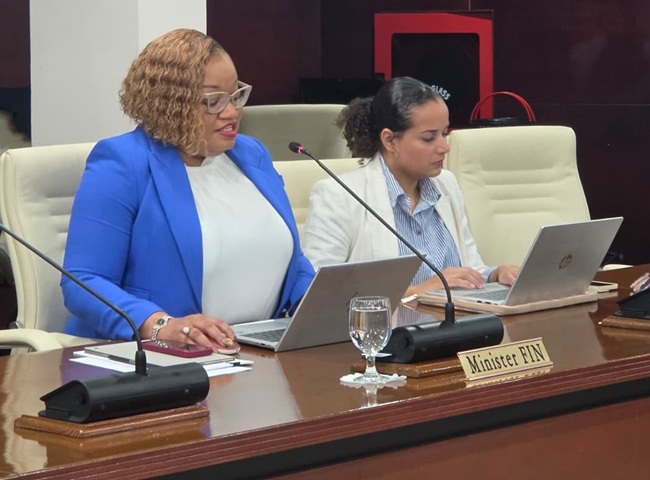
Philipsburg, Sint Maarten – The Government of Sint Maarten has reached a historic milestone following the unanimous approval of the 2027 Draft National Budget by the Council of Ministers on Thursday, June 25, 2026.
The Minister of Finance announced that the 2027 National Budget is expected to complete the constitutional process within the legally prescribed timeframe. While several important steps remain before ratification, this approval by the Council of Ministers places Sint Maarten in a position to have an approved national budget before the end of the year for the first time in the country’s history.
This milestone is the result of months of preparation, unprecedented collaboration across Government, and a deliberate decision to learn from the past and fundamentally change the way the national budget is prepared.
In presenting the 2026 National Budget to Parliament, Minister of Finance Marinka Gumbs made clear that the longstanding pattern of delayed budgets could not continue. Rather than treating these delays as isolated events, the Ministry chose to examine the underlying causes that had contributed to repeated delays over many years. The conclusion was clear: delivering budgets on time would require more than working harder. It would require working differently.
The 2027 budget cycle marked a fundamental shift in Government’s approach to budgeting. Rather than beginning with numbers alone, the process began with strategy. In February, the Ministry of Finance launched the 2027 budget cycle with its first-ever Strategic Budget Session, bringing together Ministers, Secretaries-General, Financial Controllers, Chiefs of Staff, the Policy-Based Budgeting team, and the Financial Policy Department (FBBB). Representatives of the CFT also attended the session as observers.
This collaborative approach continued over the following months through regular working sessions and targeted support for ministries requiring additional assistance. By engaging ministries earlier and working closely with them throughout the process, Government was able to align policy priorities with available resources, identify challenges sooner, and improve both the quality and timeliness of budget preparation.
Those conversations laid the foundation for a budget process built on planning rather than urgency.
Government also continued implementing Policy-Based Budgeting, strengthening the connection between public spending and the policy outcomes it seeks to achieve. Rather than viewing the budget as a collection of expenditures, ministries were challenged to clearly define what they intended to accomplish, how those priorities supported Government’s broader objectives, and how public resources would contribute to measurable results.
Throughout the budget cycle, the Policy-Based Budgeting team within the Ministry of Finance worked closely with every ministry, providing guidance and technical support that improved the quality, consistency, and coherence of budget submissions while helping ministries stay on schedule.
The Minister of Finance underscored that this achievement is shared. “This is not a success that belongs to the Ministry of Finance alone. It belongs to this Government. It belongs to every ministry that committed itself to the process, every civil servant who contributed to the preparation of the policy books, every Financial Controller who worked tirelessly behind the scenes, every Secretary-General who provided leadership within their ministry, and every colleague Minister who took ownership of their ministry’s priorities.”
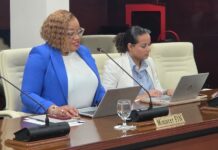
Minister Marinka Gumbs thanked her fellow members of the Council of Ministers for embracing a more disciplined approach to the budget process. Their early engagement, difficult policy choices, and active involvement made this a truly Government-wide effort.
The Minister of Finance reserved special recognition for the Secretary-General of Finance, Ms. Roxanne Howell, the Financial Policy Department and the Policy-Based Budgeting team, internally led by Christian Grannum with project management support by Grant Thornton, Jan Ludolf Herees and Robert van Zeeland, for the leadership they provided throughout the reform process.
Often working outside public view, these professionals provided the steady coordination, sound judgment, and collaborative approach required to transform an ambitious reform into a tangible result.
The Minister added that this milestone also establishes a new expectation for Government: “We have shown that institutional reform is possible. We have demonstrated that with planning, discipline, and collective ownership, Sint Maarten can deliver its national budget on time. We have raised the standard. Our responsibility is no longer to prove that it can be done, but to continue improving the quality of our budget submissions while refining our timelines year after year.”
While important constitutional steps remain before the budget reaches Parliament, this milestone offers confidence that the country is entering a new chapter in public financial management. The work continues, but the foundation has been laid.
Reflecting on the achievement, Minister Gumbs concluded:
“This achievement is significant, but it is not the destination. It is evidence that we are moving in the right direction. This Government remains committed to continuously improving both the quality of the budget and the discipline of the process that produces it. The people of Sint Maarten deserve nothing less.”
The Draft National Budget 2027 has now been submitted to the CFT for its advice. In addition, the Minister of Finance has submitted an Improvement Plan for the 2027 budget process, reflecting her commitment to the timely completion of the 2027 National Budget. The remaining stages of the budget process include review by the Council of Advice before the draft budget is submitted to Parliament.