





















Traditional fishing is a Human Rights, Cultural Rights and Indigenous Rights Issue.
The Bonaire Human Rights Organization (BHRO) views the treatment of artisanal Bonairean fishermen engaged in traditional seasonal net fishing for masbango as a human rights, cultural rights, and indigenous rights issue, not merely a fishing dispute.
Protection of culture, natural rights and International oversight.
Restrictions on traditional fishing practices raise serious concerns regarding the protection of Bonaire’s cultural heritage, traditional livelihoods, and natural rights. BHRO also highlights the absence of the protections and international oversight envisioned under Article 73 of the United Nations Charter for Non-Self-Governing Territories. This is the reason why James Finies believes that placing Bonaire back on the list of Non-Self-Governing Territories would help ensure that native Bonaireans are protected from demographic and cultural erasure.
Finies emphasizes that for many Bonaireans, including his father, grandfather, and generations before them, the masbango issue is not simply about fishing. It is about protecting culture, preserving tradition, respecting natural rights, and ensuring that fundamental human rights are not subordinated to policies imposed without regard for the Bonairean people and their way of life.
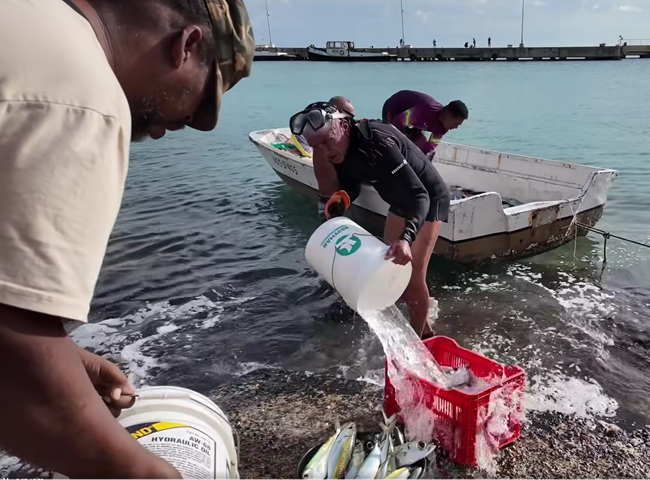
Reports recently emerged of Bonairean fishermen being confronted and allegedly intimidated by harbor authorities while carrying out their traditional fishing activities. The incidents are reportedly linked to conservation and protection regulations administered by STINAPA and enforced in cooperation with the Harbor Master’s Office.
The controversy intensified following a public discussion involving STINAPA. Melissa van Hoorn, who previously worked for the Dutch Ministry of Agriculture, Fisheries, Food Security and Nature in the Netherlands and became Director of STINAPA in October 2025, did not personally represent STINAPA in this controversy. Instead, the director was represented by her subordinate, local official Leonel Martijn. Critics argue that this placed a Bonairean face before the public while policies and regulations continued to be directed from institutions linked to the Netherlands.
Public support across the Dutch Caribbean.
The debate quickly spread across social media in Bonaire, Curaçao, and Aruba, with widespread support expressed for the fishermen. The discussion evolved into a broader conversation about culture, traditional rights, and the growing perception of diminished local influence over decisions affecting Bonaire.
Generations of Traditional Artisanal Fishing.
The fishermen involved were catching masbango in the same manner that Bonaireans and their ancestors have done for generations. They are traditional artisanal fishermen, not large-scale commercial operators, and rely on knowledge passed down through generations rather than industrial vessels, commercial nets, or modern fishing fleets.
The Bonaire Human Rights Organization (BHRO), founded by James Finies, has consistently raised concerns about the impact of the post-2010 constitutional arrangement on the rights, culture, and identity of the Bonairean people. BHRO maintains that policies affecting traditional livelihoods and local communities should be developed with meaningful Bonairean participation and with respect for their culture, traditions, and historical connection to their island.