



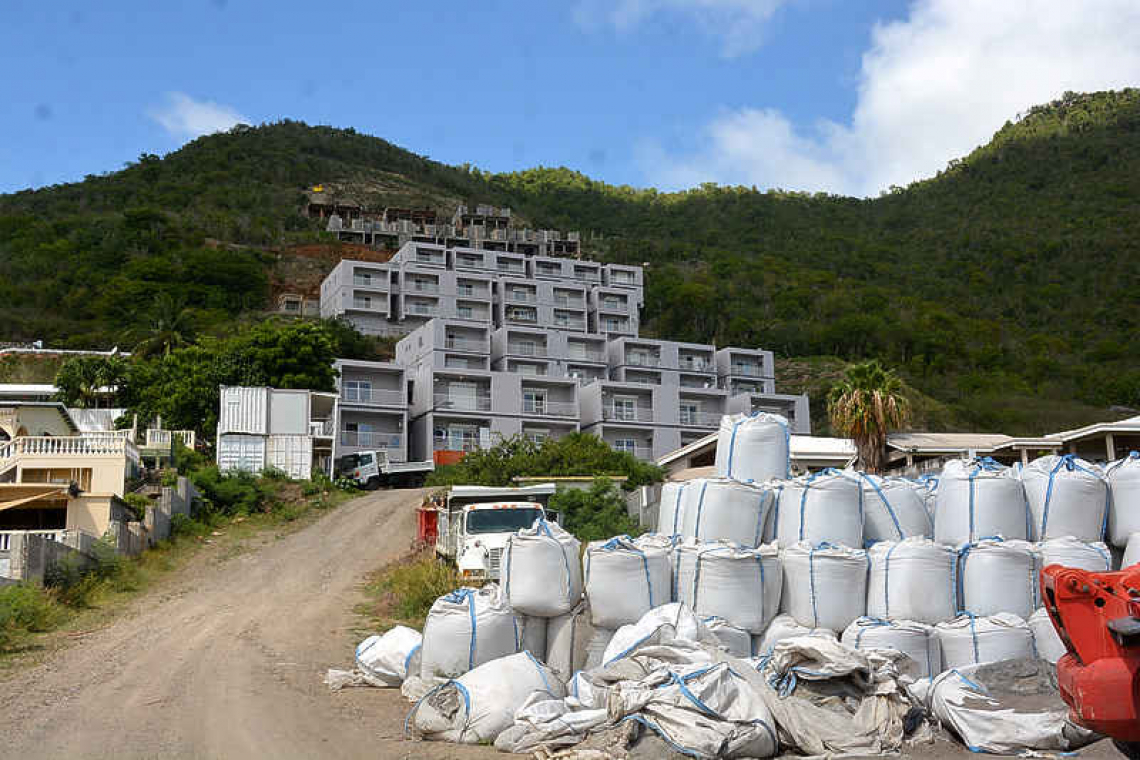


Years later, victims are still carrying financial burdens, court judgments have failed to deliver effective relief, and serious questions remain about institutional accountability.
Philipsburg, Sint Maarten — Years have passed since the Carbon Grove real estate scandal began unfolding, yet for many of the affected families, the nightmare is far from over. While some continue to repay loans for properties they never received, others have lost their life savings, their dreams of homeownership, and their confidence in the very institutions that were supposed to protect them.
Gromyko Wilson is once again raising serious concerns about the Carbon Grove scandal, particularly in light of recent court developments that expose troubling questions about the protection of property buyers, the enforcement of court judgments, and the effectiveness of Sint Maarten’s legal and financial systems.
“These are not just investors who lost money. These are hardworking people who saved, sacrificed, borrowed, and trusted that the system would protect them. Years later, some are still paying for homes they never received, while the people who suffered the losses are the ones left fighting for justice. Something is fundamentally wrong with that picture,” Wilson stated.
When the dream of homeownership becomes a lifetime of debt


For many of the Carbon Grove purchasers, buying property represented years of hard work and sacrifice. Some invested their savings, while others secured financing through financial institutions, believing they were taking an important step toward financial security.
Instead, they found themselves caught in a situation involving unfinished developments, properties that were reportedly sold to multiple purchasers, disputed ownership rights, and substantial financial losses.
As recently as April 2025, affected residents publicly appealed to the government, reporting that some were still paying mortgages on properties consisting of little more than empty lots or unfinished structures.
Wilson questions how a situation of this magnitude could continue for so many years without a coordinated institutional response.
“Imagine waking up every morning knowing that you owe the bank thousands of dollars for a home you cannot live in, cannot rent, and may never legally own. Imagine having to explain to your children that the money you saved for their future is gone, but the debt remains. That is the reality we are talking about. These are people’s lives.”
He believes the emotional and financial consequences of this scandal have not received
the serious national attention they deserve.
Recent court verdict raises even more troubling questions

Wilson points to the recent October 27, 2026, judgment of the Court of First Instance of Sint Maarten as another painful illustration of the difficulties victims continue to face.
In that case, a purchaser paid US$160,000 for an apartment in the Carbon Grove development that was never delivered.
The purchaser had already obtained a court judgment in November 2023 ordering the developer to transfer the apartment. However, the property was never transferred.
The purchaser subsequently sought to hold the real estate agent and agency involved in the transaction liable for failing to warn him about the risks of paying the developer directly.
The court dismissed the claim, finding that the agent and agency had not breached their legal duty of care. The purchaser was also ordered to pay Cg 12,000 in litigation costs.
While Wilson respects the independence of the judiciary and recognizes that the court must apply the law to the facts before it, he believes this outcome should concern every policymaker in Sint Maarten.
“A man pays US$160,000 for an apartment. He never receives it. He goes to court and wins a judgment ordering delivery, yet still does not receive his property. He goes back to court seeking compensation from other parties involved in the transaction, loses that case, and is now faced with another Cg 12,000 in legal costs. How can anyone look at this situation and conclude that our system is adequately protecting ordinary people?”
Wilson stresses that the issue is not whether the court applied the law correctly, but whether the existing laws provide sufficient protection in the first place.
Particularly concerning is the court’s discussion of direct payments to developers without the intervention of a notary, a practice described during the proceedings as not unusual in Sint Maarten.
“If a practice exposes purchasers to the possibility of losing their entire investment, then the fact that it may be common should not reassure us. It should alarm us. We should be asking why stronger safeguards are not in place.”
Where was the protection, and where is the accountability?
Wilson believes the Carbon Grove scandal raises serious questions about the responsibilities of developers, real estate professionals, financial institutions, notaries, and the government.
In earlier court proceedings, concerns were already raised about the developer’s financial arrangements and the risks being transferred to purchasers. In a 2021 judgment, the court went as far as comparing aspects of the operation to a Ponzi scheme.
Yet years later, victims continue to struggle with the consequences.
Wilson questions whether sufficient safeguards exist to ensure that money paid toward properties under development is protected, that ownership rights are properly verified, and that purchasers are adequately informed of existing mortgages and other financial risks.
He also questions the role of financial institutions in financing developments and individual purchasers, particularly where the underlying projects fail to materialize.
“When ordinary people approach a financial institution for a loan, every aspect of their financial situation is examined. Their income, employment, existing debts, and ability to repay are scrutinized. Yet we must ask whether the same level of scrutiny and responsibility is applied to the developments into which these people are encouraged to invest.”
Wilson believes these questions deserve a comprehensive review, not to assign guilt without evidence, but to determine where the system failed and what must change.
What became of the criminal investigation?
Equally disturbing to Wilson is the continued uncertainty surrounding the criminal investigation previously reported in connection with Carbon Grove.
In 2023, reports indicated that the Public Prosecutor’s Office and police were investigating matters related to the development.
The seriousness of the allegations, including reports of properties being sold to multiple purchasers and substantial sums of money being collected without delivery, demands a thorough and credible investigation.
“Years have passed. Victims have spoken publicly, court judgments have been issued, and serious allegations have been raised. Yet what do we know about the outcome of the criminal investigation? Has it been completed? Have the allegations been fully examined? And if no criminal charges have resulted, what explanation can legally be provided to the affected families?”
Wilson acknowledges that the Public Prosecutor’s Office must operate independently and that investigations can be complex.
However, he believes the prolonged uncertainty has contributed to a growing sense among victims that their suffering has been forgotten.
“Justice cannot become something that people only read about in court documents while their financial reality remains unchanged. Our institutions must inspire confidence that serious complaints will be investigated, that the law will be enforced, and that people will not simply be left to fend for themselves.”
Government cannot simply call this a private matter
Wilson argues that while the government cannot automatically be held responsible for the financial obligations of private developers, it cannot ignore the broader failures exposed by this scandal.
The protection of property rights, consumer interests, and the integrity of the real estate market are matters of public interest.
He believes the government and Parliament should have already undertaken a comprehensive review of the legal framework governing property developments and advance payments.
Among the measures Wilson believes deserve urgent consideration are stronger protections for purchasers’ deposits, mandatory financial safeguards for development projects, clearer disclosure of mortgages and ownership restrictions, and improved mechanisms for enforcing court judgments.
He also calls for direct engagement with affected families and financial institutions to explore possible arrangements for those still carrying substantial debts connected to properties they never received.
“We cannot continue speaking about making homeownership accessible, strengthening our middle class, and encouraging young people to invest in Sint Maarten while ignoring the very real possibility that one failed transaction can destroy a family’s financial future.”
Wilson believes that a country serious about economic development must ensure that its legal and financial institutions protect the people whose investments sustain that development.
The victims deserve more than sympathy and political attention
Wilson also expressed disappointment with the political attention surrounding Carbon Grove in the period leading up to previous elections.
He recalls how the scandal became a subject of public concern, with politicians engaging affected purchasers, attending discussions, and expressing their commitment to finding solutions.
Yet following the elections, the matter appeared to lose much of its political urgency, despite the fact that the victims’ circumstances had not improved.
“I find it deeply disappointing that issues such as these can attract so much political attention when elections are approaching, but afterward the public hears very little about concrete follow-up. Where are the parliamentary questions? Where are the legislative proposals? Where is the continued engagement with these families?”
Wilson stresses that the suffering of citizens should never become an opportunity for temporary political visibility.
“These people were not victims only during an election campaign. They were victims before the elections, they remained victims afterward, and some are still carrying those financial burdens today. Their suffering does not follow our political calendar.”
He makes it clear that he has no intention of approaching the matter in that manner.
“I will not use people’s pain for political convenience. If I stand with people in their struggle, I intend to continue standing with them when the cameras are gone and the elections are over. I cannot promise them an outcome that is beyond my authority, but I can promise that I will continue asking questions, demanding accountability, and advocating for the changes needed to prevent this from happening again.”
Wilson is of the opinion that the Minister of Justice needs to be called to Parliament to answer questions and to explain why this case has still not reached court as a criminal case.
A country must be judged by how it protects its people
Wilson concludes that the Carbon Grove scandal is about much more than one failed real estate development.
It raises fundamental questions about the strength of Sint Maarten’s institutions, the protection of ordinary citizens, and the ability of the legal system to provide effective remedies when things go wrong.
“We often speak about development, investment, and progress. But development cannot simply mean constructing more buildings and attracting more investors. Real progress means creating a country where people can invest their hard-earned money with confidence, where institutions function, and where the rights of ordinary citizens are protected.”
For Wilson, the continued suffering of the Carbon Grove victims should serve as a warning that legislative reform and institutional accountability can no longer be postponed.
“We cannot undo the years these families have lost. We cannot erase the stress, the disappointment, or the financial sacrifices they have endured. But we can decide that their suffering will not be ignored and that the lessons from this scandal will lead to meaningful change.”
“The victims of Carbon Grove deserve more than sympathy, more than promises, and more than another court judgment they cannot enforce. They deserve answers, accountability, and a system that works for them.”
“And until those questions are answered, I will continue to raise my voice on their behalf.” —Wilson stated