










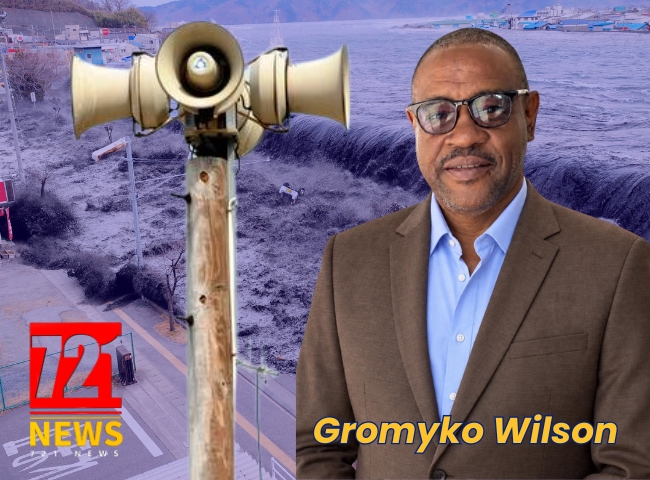
PHILIPSBURG, Sint Maarten — Concerned citizen Gromyko Wilson continues to demand a disaster preparedness system that places the safety of the people, not government appearances, expensive equipment, or official ceremonies at its center.
Wilson has long advocated for better weather-monitoring equipment, effective emergency-alert horn systems, and dependable public communication. His position remains clear: identifying an approaching threat is meaningless if officials fail to warn the public properly and early enough for people to act.
“What is the purpose of having advanced equipment that tells the government dangerous weather is approaching if that information does not reach the people in time?” Wilson asked. “Equipment alone does not save lives. People can only protect themselves when the government communicates clearly, quickly, and honestly.”
Wilson stressed that officials cannot continue treating communication as an afterthought. A late press release or a single online post does not constitute an effective public warning, especially on an island where many residents lack constant internet access, reliable electricity, safe housing, or transportation.
“The people living in the most deplorable conditions are often the ones facing the greatest danger,” Wilson said. “Some families have leaking roofs, weak structures, or homes in flood-prone areas. Some residents need help moving elderly relatives, children, or persons with disabilities. These people cannot prepare properly when information comes at the last minute.”
The government’s responsibility does not end when meteorologists detect a developing system, he said. Public officials have a duty to ensure that every resident understands the danger, knows what action to take, and has enough time to prepare.
“A warning that remains inside a government office is not a warning to the people,” Wilson said. “Information posted where only a portion of the population will see it is not adequate communication. The government must stop congratulating itself for acquiring equipment while residents are still left uninformed, confused, or scrambling at the last minute.”
Wilson maintains that emergency information must be issued simultaneously through radio, television, SMS alerts, social media, local news outlets, emergency sirens, and direct community outreach. Messages must also be accessible to the elderly, persons with disabilities, and residents who speak the languages commonly used throughout Sint Maarten.
“The people must always come first,” Wilson said. “Government information does not belong to ministers, departments, or selected media platforms. When that information concerns public safety, it belongs to every resident.”
Communication failures have real consequences, he warned. Families can lose precious preparation time, vulnerable residents can become trapped, and emergency workers can face greater pressure because warnings were not delivered effectively.
“We cannot control the weather, but the government can control how quickly and responsibly it informs the population,” Wilson said. “If officials know that danger is approaching and fail to make every reasonable effort to reach the people, that is not simply poor communication. It is a failure of leadership and a failure of duty.”
Tsunami preparedness remains a critical gap
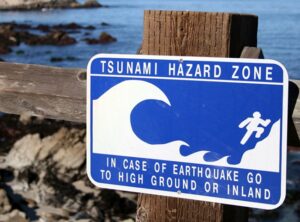 A final and essential part of any disaster plan, Wilson said, is making sure the public knows exactly what to do if an earthquake strikes and a tsunami alert is issued across the Caribbean. Sint Maarten residents have never been trained or educated on the steps to take or the routes to use if a tsunami is approaching the island.
Law enforcement personnel, he added, have no clear guidance on when or how they should direct large numbers of people toward higher ground. No drills or official plans have ever included schools, businesses, or the general public. If such an event occurred during school hours, Wilson warned, it could become the most disastrous event in Sint Maarten’s history.
Since 10-10-10, he argued, successive governments have paid little attention to this scenario. Ministers without disaster-management expertise have been appointed and have relied on advisers who believe they are in control but remain unprepared. The people best placed to overhaul St. Maarten’s emergency plans, Wilson said, are specialists who have advised countries that have already lived through devastating earthquakes and tsunamis.
The island is experienced in hurricane preparedness, he noted, and that knowledge is valuable. A fresh, independent review of existing plans would still be a necessary next step.