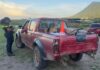





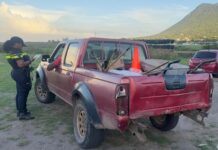








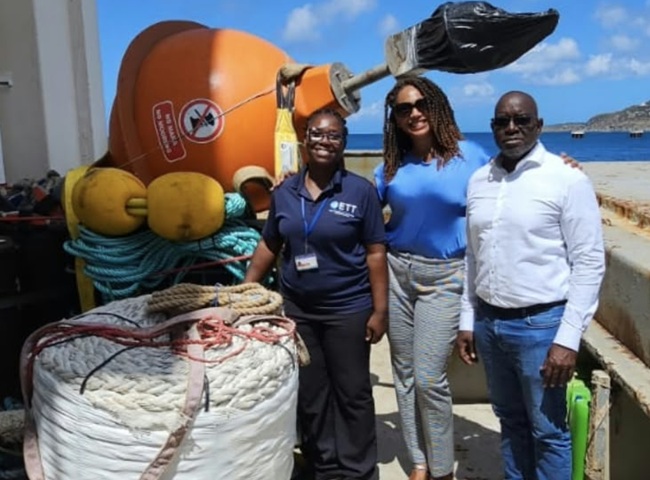
Pond Island, Sint Maarten — Minister of Tourism, Economic Affairs, Transport and Telecommunication (TEATT), the Honorable Grisha Heyliger-Marten, has welcomed the arrival of three Fish Aggregating Devices (FADs) donated to the Government of Sint Maarten by the Government of Curaçao, under the leadership of Prime Minister Gilmar Pisas.
The donation follows a work travel visit in 2025 from Minister Heyliger-Marten and represents an important step in the Ministry’s efforts to strengthen Sint Maarten’s local fisheries sector, expand opportunities for local fishers and support the country’s long-term food security.
“This donation demonstrates what meaningful cooperation within the Kingdom can deliver for our people,” Minister Heyliger-Marten stated. “I extend my sincere appreciation to Prime Minister Pisas and the Government of Curaçao for responding positively to our request and
supporting our efforts to create more opportunities for Sint Maarten’s fishers. This is a practical investment in an important local sector and in our ability to increase access to locally caught fish.”
FADs stands for Fish Aggregating Devices. FADs are floating structures placed in open water to encourage pelagic fish to gather in a particular area. Fish naturally associate with floating objects for shelter, shade, orientation and access to food. Over time, algae and other marine organisms develop around the submerged sections of the device, attracting smaller fish and, in turn, larger species such as mahi-mahi, tuna, wahoo, yellowfin and blackfin tuna, and amberjack.
FADs do not create or significantly increase fish populations. Instead, they concentrate fish already present in the surrounding waters, making them easier for fishers to locate. When properly deployed and managed, they can help reduce the time and fuel required to search for fishing grounds while creating more targeted offshore fishing opportunities.
The donated FADs were constructed in Curaçao and are equipped with lighting, radar reflectors and Automatic Identification System(AIS) tracking equipment to promote maritime safety. The Bureau Telecommunications and Post Sint Maarten (BTP) has approved and issued the Maritime Mobile Service Identity (MMSP) numbers required for the devices. These unique identification numbers allow the FADs’ AIS beacons to transmit their identity and position to vessels and maritime authorities.
Following consultations between the Nature Foundation Sint Maarten and local fishers, proposed locations for the devices were submitted and subsequently approved by BTP. Two FADs are expected to be deployed at the approved locations, while the third will be retained in storage as a replacement or backup device.
A technical team from Curaçao will travel to Sint Maarten to assist the local team with the installation. Deployment will take place as soon as operationally feasible, taking into consideration the availability of the technical teams, suitable marine conditions and the peak of the hurricane season.
The donation also includes a maintenance plan to guide the continued monitoring and upkeep of the devices following deployment.
“This initiative is about more than putting equipment in the water,” Minister Heyliger-Marten added. “It is about giving our fishers improved access to offshore fishing opportunities, supporting local livelihoods and taking another concrete step towards a stronger and more productive fisheries sector. Our waters are an economic resource, and we must manage them responsibly so they can continue to provide opportunities for generations to come.”
The Ministry would like to also thank the Department of ETT, Mr. Shervin Frederick and his team, the Department of Shipping & Maritime, Nature Foundation and especially the fisherman (all others) that have played a role and will continue to do so once installation is complete. The Ministry of TEATT will continue working with the relevant authorities, technical partners, both internally and externally, and the local fishing community to facilitate the safe deployment, management and maintenance of the FADs.