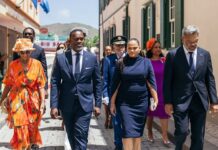


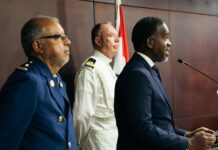








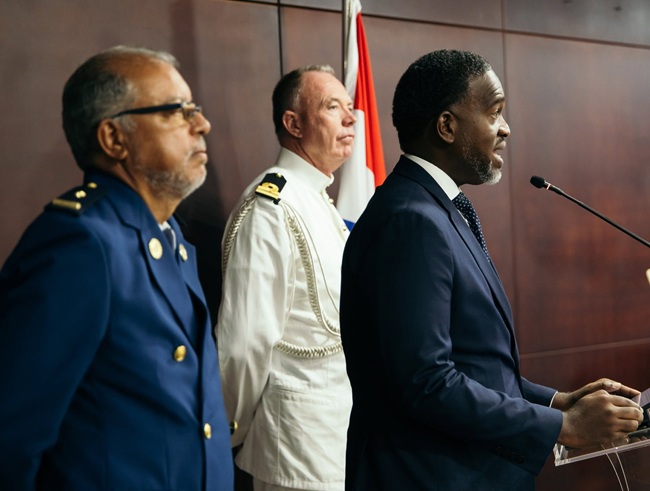
HARBOUR VIEW, PHILIPSBURG — Today, Tuesday, September 8, 2026, His Excellency Governor Ajamu G. Baly delivered his official address to the nation on the occasion of the Opening of the Parliamentary Year 2026/2027. In keeping with solemn tradition, this annual ceremony is held on the second Tuesday of September. Speaking on behalf of the Council of Ministers, the Governor outlined the government’s vision, key priorities, and set forth the legislative agenda for the year ahead.
The full text of His Excellency’s address is provided below.
Madame Chairlady, Members of Parliament, good morning,
I stand before you today in my capacity as Governor in accordance with article 46 of the Constitution of Sint Maarten to provide you with an explanation of the policy to be pursued by Government in the coming parliamentary year 2026-2027.
Sixteen years after attaining Country Status within the Kingdom of the Netherlands, Sint Maarten continues to strengthen the institutions, systems and administrative capacity required of an autonomous country. The independent evaluation of the Country Package reaffirmed that further investment is required to strengthen the core functions of Government. Continued efforts to modernize public administration, improve policy implementation, strengthen financial management and accelerate digital transformation therefore remain essential to enhancing service delivery and supporting long-term national development.
On this historic occasion, the opening of the 2026-2027 parliamentary year, I am pleased to inform the people of Sint Maarten that the 2027 National Budget has been submitted to Parliament.
The submission of the 2027 Budget at this stage represents an important milestone in the continued strengthening of the country’s fiscal governance, accountability, and financial planning. It reflects the Government’s efforts to improve the budgetary process and to provide Parliament with the opportunity to consider and deliberate on the country’s financial framework.
The 2027 Budget sets out the Government’s financial framework for the coming fiscal year, providing for current expenditures of Cg 662.2 million against projected revenues of Cg 670.3 million, resulting in a positive difference of approximately Cg 8.1 million.
In addition, the Budget provides for Cg 221.24 million in capital investments, Cg 5.28 million in loans, and authorizes up to Cg. 52.99 million in financing for capital investments.
These figures reflect a continued focus on maintaining fiscal balance and responsible financial management, while at the same time creating room for investments that support the continued development of Sint Maarten and address the priorities of its people.
The submission of the 2027 Budget is therefore more than an administrative achievement. It represents an important step in strengthening the country’s financial planning and governance. The budget legislation establishes the financial framework for the 2027 fiscal year and provides the legal basis for the implementation of the Government’s policies and programs.
As Parliament begins this new parliamentary year, the availability of the 2027 Budget provides an opportunity for meaningful and thorough consideration of the financial priorities of the country and the path forward toward sustainable development, sound public finances, and a stronger Sint Maarten.
The economy has continued to demonstrate resilience despite an increasingly uncertain international environment. Tourism remains the primary driver of economic activity, supported by continued growth in both stay-over and cruise arrivals. Air arrivals during the first half of 2026 reached 566,722, an increase of 21.4% compared with the same period in 2025, while cruise arrivals approached one million, reflecting growth of 13.9%. Turnover Tax revenue for 2025 increased by 7.4% to Cg. 171.3 million, while inflation remained comparatively contained.
For 2027, the economy is projected to grow by approximately 2.2% in real terms, while inflation is projected at approximately 2.1%. The debt-to-GDP ratio is expected to remain between 32% and 33%. These indicators provide reason for cautious optimism while underscoring the importance of maintaining fiscal discipline and continuing institutional reforms. At the same time, Government remains committed to strengthening implementation capacity, addressing staffing shortages and increasing the country’s resilience to economic, social and climate-related challenges.
Government also continues to invest in the country’s social and economic development. Across the areas of healthcare, education, social development, labor, public safety, housing, infrastructure, climate resilience and economic diversification, reforms are being pursued to strengthen institutions, improve public services and ensure that economic progress is accompanied by tangible improvements in the quality of life of the people of Sint Maarten.
As Sint Maarten enters the parliamentary year 2026–2027, the country continues to build on the progress achieved in recent years while addressing the structural challenges that remain.
Strengthening Government and Public Finances
Government’s first responsibility is to strengthen its own capacity to serve. The Ministry of General Affairs will focus on stabilizing the shared services that support the entire public administration, particularly the departments of Personnel and Organization, Legal Affairs, ICT, and Facility Services. Crisis measures, intensified recruitment and administrative compliance initiatives are being implemented to address longstanding backlogs in invoices for services already delivered, while also strengthening organizational capacity and improving service delivery across Government. A screening law for political office holders will be delivered to ensure the integrity of our Government.
A central initiative will be the introduction of an electronic Human Resource Management system (e-HRM) based on Microsoft Dynamics 365, with AI-instruments to improve data-driven working. This will replace fragmented paper-based processes, establish a single source of reliable personnel information, and enable employee and management self-service.
When it comes to the use of AI the Government is looking forward to working together with the Digital Transformation and AI Workgroup that Parliament set up in early 2026.
Government will continue to invest in a professional, motivated and properly supported civil service. In consultation with the unions represented in the CCSU, Government intends to work towards a multi-year agreement addressing salaries and basic working conditions, while taking due account of the country’s financial constraints.
The Ministry of Finance will continue to modernize the Tax Administration, strengthen policy-based budgeting, improve quarterly budget implementation reporting, and further implement the Enterprise Resource Planning (ERP) system across Government. Internal audit and risk-based controls will be strengthened to improve procurement, payment processes, financial reporting and the timely production of reliable and auditable financial statements via the use of analytical tools and data-driven decision-making. These reforms will provide taxpayers with faster, more transparent and user-friendly services, reduce administrative burdens, strengthen voluntary compliance, and improve Government’s ability to finance essential public services.
These efforts are complemented by reforms across ministries to strengthen governance, improve accountability and ensure the efficient use of public resources in support of sustainable public services.
Tax reform will focus on simplifying administration, broadening the tax base where appropriate, improving fairness, strengthening voluntary compliance, and ensuring alignment with international standards. The objective is to provide a fiscal system that finances essential public services while supporting sustainable economic development. The focus will also be on delivering legislation on public procurement and Caribbean Financial Action Task Force (CFATF) related legislation to set high standards and prevent money laundering.
Economic Growth, Tourism and Diversification
Tourism remains the principal driver of economic activity, employment, business development, and Government revenue. During 2026, Government and its partners continued to strengthen airlift, destination marketing, product development, and public-private cooperation. The introduction of non-stop Southwest Airlines services from Orlando and Baltimore/Washington expanded access to key United States markets.
Government’s focus is increasingly directed toward year-round tourism growth, particularly during traditionally slower periods. Targeted marketing, strategic airline partnerships, events, cultural and sports tourism, improved public spaces, and stronger tourism intelligence are intended to increase occupancy, visitor expenditure, and economic activity throughout the year.
Economic resilience requires diversification beyond tourism. Government will continue to promote innovation and develop the blue, green, and orange economies, while supporting agriculture, livestock, fisheries, maritime services, exploring opportunities in the technology industry, and other emerging sectors. Through the Country Package, the World Bank, and related technical programs, work is advancing to improve the business environment, modernize economic licensing, strengthen access to finance, update MSME (Micro, Small and Medium-sized Enterprises) policy frameworks, and improve oversight of entrepreneurship-support institutions.
MSMEs account for approximately 95% of local economic activity. Strengthening their access to knowledge, finance, digital tools, and markets is therefore central to inclusive growth. Government will also continue consumer-protection efforts through monitoring and enforcement of maximum prices, with the basket of regulated essential goods expanded to 72 items.
Government also recognizes that sustainable economic growth depends on a well-functioning labor market. Efforts will therefore continue to strengthen workforce development, improve labor market information, enhance employment services through the National Employment Service Center (NESC), and better align workforce skills with the needs of the economy.
Reliable data is necessary for effective and evidence-based policy decisions. The Department of Statistics is expanding its publications, introducing digital data-collection tools, developing an interactive statistical portal, and strengthening the use of administrative data. Cooperation with the statistical institution of Saint Martin is intended to improve the comparability of population, labor-force, and price information across the island.
When it comes to delivering legislation the focus will be on and regulatory frameworks for the Sint Maarten Tourism Authority, the Sint Maarten Gambling Authority, the establishment of the Economic Regulatory Authority and an Independent Statistical Department, the establishment of the ALFA Agency (Agriculture, Livestock and Fisheries Agency), the introduction of Competition Authority and Consumer Protection Legislation, a Public Transportation Reform Legislation and the establishment of an Innovation & Investment Promotion Agency (IIPA).
Public Safety, Justice and Border Security
Government continued to safeguard public safety, secure the nation’s borders, and advance key institutional reforms throughout 2025 and into 2026. Essential law enforcement, border management, and justice services were maintained while important investments were made to modernize the justice chain and strengthen national security. Encouraging reductions were recorded across several major crime categories, reflecting the commitment and professionalism of justice sector personnel. Public safety remains essential to the quality of life of residents, the confidence of investors, and the sustainability of the tourism economy. During the reporting period, major crime indicators improved. Homicides declined by 19%, armed robberies by 15%, traffic accidents by 11%, and emergency calls by 5.5%. Arrests, traffic citations, and firearm seizures increased, while law-enforcement agencies confiscated more than 650 kilograms of illegal narcotics.
Youth crime remains a concern and requires more than enforcement alone. Government will pursue an interministerial approach involving justice, education, public health, social development, labor, families and community organizations to strengthen prevention, early intervention, positive mental wellbeing and developmental pathways for young people.
This integrated and holistic approach also recognizes the importance of victim support, community resilience, violence prevention and coordinated social interventions in addressing the underlying causes of crime and promoting safer communities.
A major milestone was the commencement of construction of the new detention facility in January 2026. The USD 52 million investment, implemented with the Kingdom of the Netherlands, UNOPS, and UNODC, will expand detention capacity and support compliance with international human-rights and safety standards.
Border management is also being modernized. The Foreigners Management System is streamlining residence-permit processing, while Customs is preparing for ASYCUDA World and implementing an 18-month’s Biosecurity Initiative. These measures support security, revenue protection, public health, trade facilitation, and more efficient border operations, while strengthening the country’s preparedness to respond to biosecurity and other cross-border public health risks. This will reinforce Sint Maarten’s reputation as a safe and well-managed destination.
Transnational organized crime, narcotics trafficking, human smuggling and trafficking, anti-money-laundering obligations, detention conditions, and the modernization of the justice chain will remain priorities.
Digital transformation remains a key objective. Continued investments in modernizing police databases, court records, and immigration systems will support a more efficient, transparent, and data-driven justice sector, aligned with broader national e-government initiatives.
The Government intends to advance several important legislative initiatives during the 2026-2027 parliamentary cycle, including:
- The Attorney Ordinance (Advocatenlandsverordening), aimed at modernizing the regulation, professional standards, and oversight of the legal profession;
- The Civil-Law Notaries Ordinance (Notarislandsverordening), to strengthen the legal framework governing the notarial profession and enhance professional accountability;
- The Bailiffs Ordinance (Deurwaarderslandsverordening), updating the regulatory framework for judicial officers responsible for the execution of court judgments and official legal services;
- Amendments to the Administrative Fees Ordinance (Legeslandsverordening), to modernize fees and cost-recovery mechanisms within the justice sector; and
- The Code of Criminal Procedure (Wetboek van Strafvordering), introducing comprehensive procedural reforms to strengthen the efficiency, effectiveness, and modernization of the criminal justice system.
These legislative initiatives form part of the Governments broader agenda to modernize the legal and judicial framework of Sint Maarten and to strengthen the administration of justice in accordance with contemporary legal and institutional standards.
Education, Youth, Culture and Sport
Sint Maarten’s long-term development depends on the knowledge, creativity, health and resilience of its people. Government will therefore continue to strengthen educational pathways, improve learning outcomes, promote the physical and mental wellbeing of children and young people, preserve cultural heritage, and expand participation in sport.
The education sector is preparing to transition from the Education Strategic Plan 2016-2026 to a new Strategic Plan for 2027-2037. Priorities include improving access, strengthening student development and learning outcomes, and ensuring compliance with quality assurance, legislative and policy frameworks. Together, these initiatives are intended to equip learners with the knowledge, skills and competencies required to participate successfully in a rapidly changing society and economy.
Through the Trust Fund and Country Package, work continues on the reconstruction of the Sister Marie Laurence Primary School, the Sint Maarten Library, and the Charles Leopold Bell School; the development of the Educational Care Center; repairs to school gymnasiums and sports facilities; the Ministry Management Information System; curriculum review; early childhood development; and stronger links between secondary vocational education, workforce development and the evolving needs of the labor market.
Government will continue advancing inclusive education, teacher professional development, higher education accreditation, curriculum modernization, educational data, and a policy framework for the responsible use of artificial intelligence in public and subsidized schools. These initiatives are intended to better prepare students for further education, employment and lifelong learning, while supporting more inclusive and evidence-based educational policies.
Youth policy will focus on the Integrated Youth Policy Framework, the Child Safeguarding Policy, the National Youth Monitoring Framework, positive parenting support, the St. Maarten Youth Hub, and initiatives that promote positive mental wellbeing, healthy lifestyles and community engagement among young people. Through close collaboration between the education, public health, social development and justice sectors, Government will continue to strengthen early intervention, youth participation and support services that enable children and young people to develop their full potential.
In culture, Government will advance heritage preservation, support creative practitioners, and begin the phased transformation of the Belvedere Plantation into a Cultural and Heritage Park. In sport, Government will support athlete development, improve facilities, strengthen child safeguarding, promote healthy lifestyles, and continue preparatory work for a multifunctional indoor facility.
The Government will present the Education Supervision Ordinance (Landsverordening Onderwijstoezicht) to Parliament for consideration and will also continue advancing the development of other education-related legislative initiatives, including:
- the National Decree on the Funding of Higher Education;
- the National Decree on Accreditation Bodies in Higher Education;
- the Licensing Framework for Educational Professionals;
- the Sports Fund Ordinance; and
- the Enforcement and Sanctioning Framework for Non-compliance by Publicly Funded Schools and School Boards.
Housing, Infrastructure, Waste and Climate Resilience
Economic and population growth continue to place pressure on land, roads, drainage, utilities, public services, and the natural environment. Government’s approach must therefore balance development with spatial planning, environmental protection, climate resilience, and improved quality of life.
One of the most significant developments is continued progress toward a modern waste-management system. The extension of the Emergency Debris Management Project through 2033 creates the opportunity to complete the closure and rehabilitation of the landfill in accordance with international environmental, health, and safety standards. Government and Trust Fund partners have agreed on the legal basis for a Waste Authority with responsibility for solid waste and wastewater. These initiatives will contribute to cleaner neighborhoods, improved environmental and public health, more sustainable waste management, and a healthier living environment for residents and visitors alike.
Climate resilience remains central. Government has launched the Climate Impact Atlas, developed local climate scenarios for 2050 through 2100, advanced the National Climate Change Adaptation framework, continued flood-mitigation initiatives, and progressed planning for ecologically sensitive zones and a countrywide zoning plan.
Infrastructure priorities include stabilization of sewer pumping stations, drainage and water-management planning, island-wide road assessments, and the introduction of quality standards, in support of the introduction of a Road Fund. The National Housing Policy has been completed and presented, establishing a framework for affordable and social housing, middle-income opportunities, improved spatial development, and integration of housing needs into long-term planning. Work also continues on the Mortgage Guarantee Fund. Together, these initiatives are intended to strengthen community resilience, improve living conditions and support sustainable national development.
The Government is also working on plans to tackle the traffic congestion, also in collaboration with the northern side of the island.
The Government will present a new comprehensive Waste Management Ordinance, establishing a modern legislative framework governing solid waste management, wastewater management, and the establishment and regulation of the Waste Authority. The Government will also continue advancing the development of
- Land Issuance as well as a Land Pricing policy
- Administrative Enforcement Framework.
- Legislative support required for implementation of an updated Building Code
- The Nature Ordinance Amendments, the Nature Policy Plan and related legislation that will support biodiversity protection, protected areas, and sustainable use of the country’s natural resources.
Public Health, Social Development and Labor
Government continues to strengthen the country’s public health, social development and labor systems through initiatives aimed at improving public health, promoting mental wellbeing, strengthening social resilience and supporting a fair and healthy labor market.
Within the healthcare sector, Government has continued to advance important reforms to improve the resilience, quality, accessibility and sustainability of healthcare services. The completion of the national PAHO/WHO Non-Communicable Disease (NCD) STEPS Survey has provided an important evidence base to support targeted prevention policies, health promotion activities and future decision-making. Sint Maarten also hosted the Four-Country Consultation on Public Health, reaffirming regional cooperation in pandemic preparedness, crisis response, cross-border healthcare, mental health and the continued development of the Dutch Caribbean Public Health Expertise Network. Through the Health in All Policies framework, Government continues to strengthen cross-ministerial collaboration by integrating health considerations into broader policy areas, including education, housing, labor, social development, the environment and community safety.
Further reforms include the implementation of the Healthcare Professional Registry, continued implementation of the Pharmaceutical Cost Containment Program, and the strengthening of the Inspectorate of Public Health, Social Development and Labor. The National Mental Health Strategic Plan 2025–2035 has been approved, with implementation now underway through a dedicated implementation committee and continued collaboration with key stakeholders. Government also continues preparations for modern mental health legislation, the development of a community-based mental healthcare model, a dedicated mental health facility, expanded counselling through the Community Help Desks, strengthened after-hours primary healthcare services, and the implementation of the Healthy Ageing Roadmap. The Ambulance Department will also be strengthened through the introduction of a new ambulance and a modernized digital information system.
Government continues to strengthen social protection through the further development of the Social Registry, improving coordination and accessibility of social services. Additional initiatives include program supporting seniors, vulnerable households, volunteers, community councils, women’s empowerment, grief support and access to legal assistance. Work also continues on establishing a social minimum through the NIBUD study, which will provide the evidence base for future reforms to financial assistance and disability benefits. The implementation of the island-specific action plan arising from the ‘No Mas No More Conference’ will further support efforts to prevent domestic violence and child abuse and advance the country’s preparations for ratification of the Istanbul Convention.
Within the labor sector, Government continues to strengthen workforce development, labor market governance and employment opportunities. Minimum wage and AOV/AWW indexation have been implemented, the Labor Tripartite Committee has been reactivated, and preparatory work has commenced on an unemployment benefit scheme. The National Employment Service Center (NESC) continues to expand workforce development initiatives, employer engagement and labor market information services, while preparations continue for the launch of an online Job Portal and client management system. Government will also continue modernizing labor legislation, updating the regulatory framework for foreign labor, reviewing temporary employment agencies, conducting a Labor Force Survey and strengthening evidence-based labor market policy. An overview of the legislative products that will be presented to Parliament:
- Sustainable, Affordable Access to Health Act (SAAHA) with a phased approach to implement the General Health Insurance
- Public Health Ordinance — revision for pandemic preparedness
- Healthcare Professional Registry (BIG) legislation
- Mental health and forced care legislation
- National Ordinance on the provision of medicines
- Revision of legislation governing the Inspectorate (IVSA)
- National Ordinance on Minimum Wage — correction and indexation
- Unemployment benefit scheme legislation
Together, these initiatives contribute to a healthier population, stronger social protection, improved labor market participation and more resilient communities, while supporting Government’s broader objective of improving the quality of life of the people of Sint Maarten.
In Closing:
As a small and open island country, Sint Maarten cannot achieve its development objectives in isolation. Government will therefore continue to strengthen constructive cooperation within the Kingdom, with regional partners, the World Bank, the European Union, international organizations, the private sector and civil society. Government will also work with Members of Parliament on district empowerment.
The Country Package and the Temporary Work Organization (TWO) remain important instruments for strengthening the foundations of Government, modernizing the business environment, supporting education reform, improving public finance, and strengthening institutional capacity. Trust Fund cooperation continues to support the new hospital and mental health clinic, education reconstruction, waste reform, climate resilience and other recovery and development projects.
Sint Maarten will host the upcoming Kingdom Summit, providing an opportunity for renewed dialogue on the future of the Kingdom, the position of Sint Maarten, and the need for more structural cooperation between the four Governments and their Parliaments.
Government also continues to strengthen cooperation within the Kingdom and the wider Caribbean in the area of public health. The Four-Country Consultation on Public Health reaffirmed cooperation on pandemic preparedness, crisis response, cross-border healthcare, mental health and the continued development of the Dutch Caribbean Public Health Expertise Network, recognizing that many public health challenges require coordinated regional responses.
Regional and cross-border cooperation will continue to play an important role in promoting security, tourism, public health, statistics, food security, climate adaptation, disaster response, transportation and social development. The strengthening of Government is a multi-year effort that requires continuity, discipline, and cooperation across administrations and institutions.
Madame Chairlady, Members of Parliament,
In this new parliamentary year, Government will once again present you with various legislative initiatives towards the execution of its plans and realization of its objectives. As representatives of the people of Sint Maarten, Government looks forward to fruitful, efficient and effective dialogue as well as your committed participation this with the aim of garnering your support to serve the public interest on behalf of the people of Sint Maarten. Sint Maarten is still building a modern, professional Government apparatus that fits its responsibilities as an autonomous country within the Kingdom. No single ministry or institution can do this alone. The Government must strengthen cooperation across ministries, reinforce the relationship with Parliament, and deepen collaboration within the Kingdom.
Madame Chairlady, Members of Parliament,
I wish you much success this new Parliamentary year and I pray for your wisdom and discernment.
Thank you, God bless you and yours and God bless our great nation Sint Maarten.