















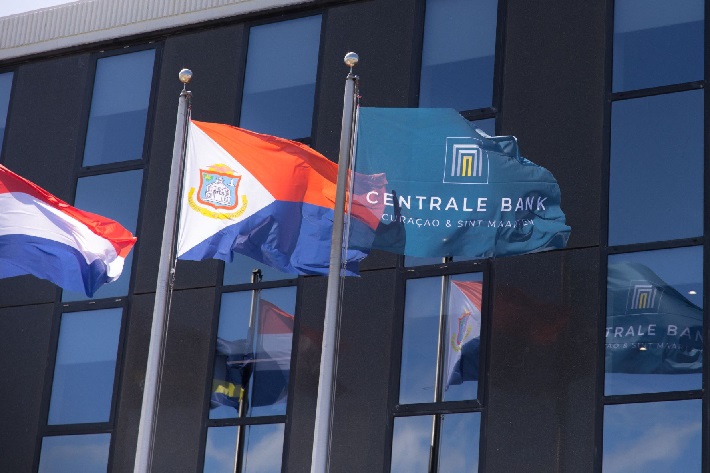
WILLEMSTAD/PHILIPSBURG – Economic activity across the monetary union is expected to continue expanding in 2026 and 2027, although at a more moderate pace than the strong growth recorded in 2025. According to the June 2026 Economic Bulletin of the Centrale Bank van Curaçao en Sint Maarten (CBCS), the outlook remains shaped by a volatile external environment, particularly developments in the Middle East, which have already contributed to higher energy and transportation costs. “The monetary union enters 2026 from a position of resilience, but that resilience cannot be taken for granted. Continued growth is expected, but the external environment requires vigilance, sound buffers, and clear policy priorities,” recommended CBCS president Richard Doornbosch.
Growth to continue, supported by tourism and investment
In Curaçao, real GDP growth is projected to moderate to 2.7% in 2026, before easing further to 2.3% in 2027 and gradually declining to 2.0% by 2030. In Sint Maarten, real GDP growth is projected to slow to 2.6% in 2026, before easing to 2.2% in 2027 and 1.9% by 2030. Across the monetary union, growth in 2026 will be driven primarily by domestic demand, supported by higher private investment in ongoing tourism and real estate projects. In addition, tourism activity in both countries has remained resilient, and first-quarter 2026 data suggest that the impact of the Middle East conflict on travel demand has so far been less pronounced than initially anticipated. “In fact, both countries appear to be benefiting from a substitution effect, with some travelers redirecting trips from the Middle East and Asia to Caribbean destinations,” noted Doornbosch.
Inflation is projected to rise in both countries in 2026, reflecting higher crude oil prices and increased transportation costs. In Curaçao, inflation is projected to increase to 2.4% in 2026, while inflation in Sint Maarten is expected to rise to 2.1%. Domestic fuel prices have already increased sharply since the escalation of the Middle East conflict. In Curaçao, gasoline and diesel prices
increased by 33.2% and 61.6%, respectively, between February and May 2026, and in Sint Maarten by 45.5% and 62.3% over the same period. “Although significant, these fuel price increases do not translate one-for-one into inflation. Fuel is only one component of the consumer basket, and the broader pass-through to consumer prices occurs gradually through transportation costs, electricity tariffs, and import prices,” explained Doornbosch.
Downside risks continue to cloud the outlook
Risks to the outlook remain tilted to the downside. In particular, a prolonged conflict in the Middle East, if it continues to disrupt shipping through the Strait of Hormuz, could lead to even higher oil prices, freight costs, and insurance costs. Such developments would raise domestic fuel, electricity, and import costs in Curaçao and Sint Maarten, eroding purchasing power and weighing on consumption and investment, while potentially dampening tourism demand. “Although the
recently announced agreement between the United States and Iran could contribute to a de escalation of tensions, lower prices, and the continued openness of the Strait of Hormuz, the situation remains uncertain and fragile,” warned Doornbosch.
Riding today’s wave to prepare for tomorrow’s risks
While the medium-term outlook remains favorable, Curaçao and Sint Maarten continue to operate in a highly uncertain external environment. As small, open, and import-dependent economies, both countries have limited influence over external shocks. However, they can strengthen the policy frameworks, buffers, and institutions that determine how effectively such shocks are absorbed.
According to Doornbosch, reducing structural dependence on imported energy should remain a key policy priority. “Broad-based fuel tax reductions may appear attractive as immediate relief measures, but they can weaken public finances and often benefit higher-income households disproportionately. More targeted support for vulnerable households would provide a more effective safety net while limiting the fiscal cost,” he stated. At the same time, accelerating the energy transition through investments in renewable energy, storage capacity, grid modernization, and energy efficiency would reduce vulnerability to future oil-price shocks.
The June 2026 Economic Bulletin also highlights the importance of strengthening disaster-risk financing in Sint Maarten, improving the investment climate, reducing administrative burdens, expanding access to finance, and aligning education and training with labor market needs.
Curaçao’s qualification for the 2026 FIFA World Cup also offers an opportunity to strengthen destination branding and convert global visibility into sustained tourism demand, provided that tourism growth remains aligned with carrying capacity and long-term sustainability. “The challenge is not only to withstand the next shock, but to use the current period of growth to build economies that are more inclusive and resilient,” concluded Doornbosch.
The complete text of the June 2026 Economic Bulletin is available on the CBCS website at https://www.centralbank.cw/publications/economic-bulletins/2026