

























By Cdr. Bud Slabbaert
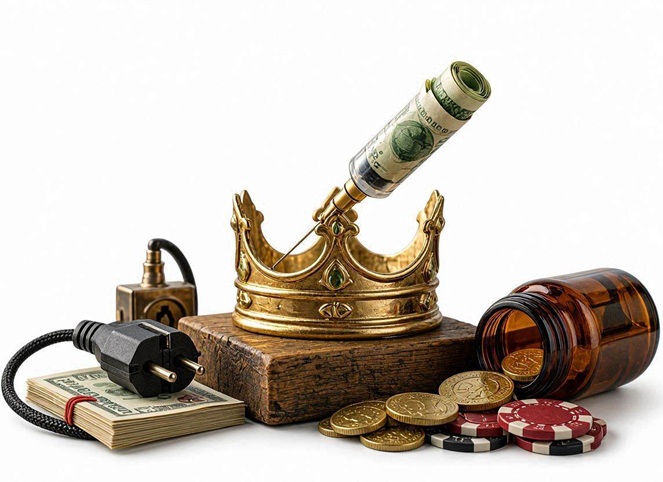
The pursuit of money and power is harmless until it becomes compulsive. It becomes dangerous the moment they stop being tools and start becoming narcotics. Then it behaves like any other addiction: it narrows the mind, corrodes the character, and blinds one to the very people one should care about, love, or need to lead.
Money and power are not addictions in themselves. Rather, the relentless pursuit of them can become addiction-like when it becomes compulsive, increasingly difficult to control, and continues despite damaging one’s relationships, health, ethics, or overall well-being.
While neither “money addiction” nor “power addiction” is an official psychiatric diagnosis in the way that alcohol or gambling addiction is, psychologists and neuroscientists recognize that the pursuit of money or power can become compulsive and addiction-like in some people.
Can money or power addiction be treated? If the pursuit becomes compulsive and harmful, it can often be addressed through psychotherapy. No one would like to hear about that treatment suggestion, especially not politicians or business executives.
An easier solution: “Cool It!”
Money itself is not addictive. What can become addictive are the feelings that acquiring money produces: excitement, status, security, control, or superiority. Interestingly, research shows that once basic needs and a comfortable lifestyle are met, additional wealth has shrinking effects on happiness. Yet some people continue chasing more because the psychological reward shifts from comfort to competition.
The common signs are, never feeling that any amount is “enough” and measuring personal worth almost entirely by wealth. Goal posts are moved and there are no limits.
Power addiction is less about serving others and more about preserving one’s own influence. The people who are in power may become attached to being obeyed, controlling outcomes, receiving admiration, winning at all costs and feeling indispensable. Rather than building a durable value, they focus on becoming the “next unicorn.”
Common signs are increasing need for recognition and fear of losing status or position. Often relationships are mainly viewed in terms of usefulness. Cases become worse when others are manipulated to maintain influence and hostility toward criticism or rivals develops.
Why these “addictions” happen is due to the contribution of psychological mechanisms.
Success, financial gains, promotions, or victories trigger dopamine release. Dopamine helps one feel rewarded, stay motivated, and remain focused — but too much or too little can cause problems. Dopamine is a neurotransmitter, a chemical messenger used by a person’s brain that shapes how one feels and behaves. As with many rewarding experiences, yesterday’s achievement no longer feels sufficient. A bigger bonus, a larger company, or a higher position becomes necessary.
Identity fusion is another mechanism. The person begins to equate “I am successful” with “I have money” or “I have power.” Fear of loss. Eventually the motivation shifts from gaining more to avoiding losing what one already has.
In business, some executives aim to expand their power and continue pursuing acquisitions, wealth, or influence despite already possessing resources beyond any practical need.
Fortunately, not every highly successful person fits this pattern. Many wealthy entrepreneurs and leaders remain motivated by innovation, philanthropy, or solving problems rather than accumulating wealth or control for its own sake.
If one must be addicted to something, then be addicted to relatives, friends and the people in the community or employees in the business. They’re the only ones who give their best to someone who genuinely cares about them. The leaders who leave the strongest legacies are often remembered not for the size of their fortunes or the extent of their authority, but for how they treated people and enabled others to grow. Fortunes may disappear and power eventually changes hands.