
















Much has been said since Hurricane Irma about the lack of capacity within Sint Maarten’s government apparatus. It has become a familiar explanation for why critical reforms, infrastructure projects, and institutional improvements continue to move at a frustratingly slow pace and the government fails to deliver the results our people deserve.
The problem is that “lack of capacity” is only part of the story.
Yes, there have been clear examples of insufficient capacity within government. But when limited capacity is combined with weak political leadership, poor prioritization, a lack of ownership by ministers, inefficient recruitment processes, and even resistance to change within parts of the civil service, failure becomes almost inevitable.
Consider the Trust Fund and the Country Packages.
One of the greatest failures has been the inability of successive governments to fully embrace the opportunities presented by the Dutch Trust Fund following Hurricane Irma and, more recently, the Country Packages following the Covid 19 pandemic. These initiatives were designed to provide not only financial assistance but also vital technical expertise to help strengthen governance, improve public services, modernize key institutions and build capacity in the process.
For the past nine years, Sint Maarten has had access to hundreds of millions in grants from the Netherlands, yet there has been no shared vision, no sustained commitment, and no collective effort by our Ministers and Members of Parliament to maximize the benefits available to the country and live up to agreements signed.
Real reform requires Ministers who take ownership of projects, champion change, and ensure that their ministries are aligned toward common goals. Instead of functioning as a cohesive team focused on national priorities, every government since 2010 has largely operated as a collection of separate ministries pursuing their own agendas—too often driven by political self-interest, personal priorities, and, in some cases, self-enrichment rather than the long-term interests of the country.
Political leaders often prioritize short-term popularity over long-term reform, focusing on the next election rather than the next generation.
As a result of poor management opportunities are missed, reforms lose momentum, and valuable resources fail to deliver their full potential. Rather than building on progress and creating lasting change, we find ourselves in a vicious cycle, revisiting the same challenges and repeating the same conversations year after year.
We continue to struggle with the same issues over and over while Members of Parliament continue to grandstand, travel to Parlatino meetings in Latin America with no tangible benefit to the people, and Ministers complain about a lack of resources to execute even basic projects.
Our Members of Parliament travel to the Interparliamentary Kingdom Consultation (IpKo) twice a year and have spent years rehashing the topic of democratic deficits within the Kingdom and the need for stronger relationships with the Netherlands. Yet we cannot even eliminate the democratic deficits that exist within our own institutions and can not even put aside individual politics in dire times to focus on the pressing needs of the people.
Tax compliance remains substandard. Government services remain inefficient and lacking. Critical reforms remain incomplete. Infrastructure challenges persist. Utilities remain overpriced, and the cost of living is spiraling out of control.
Frankly, it is embarrassing to see them lecture others in the Dutch Second Chamber when it is so evident that we are our own worst enemy.
Despite having an economy approaching US$2 billion annually, Sint Maarten continues to place a disproportionate share of the tax burden on a relatively small segment of the working population—primarily civil servants, government-related employees, and those whose income is easily monitored and taxed. Meanwhile, significant portions of economic activity continue to operate with very limited or no oversight, allowing too many businesses and investors to benefit from an uneven system while compliant taxpayers carry much of the burden.
This should not only concern every citizen but should be treated by our Council of Ministers as a national crisis.
When a country cannot fairly collect taxes, enforce its laws, broaden its tax base, or ensure that everyone contributes their fair share, the consequences affect every aspect of society.
A growing economy should result in a broader tax base, improved compliance, stronger public finances, and better services. Sint Maarten’s issue is not a lack of economic activity. The issue is a lack of governance, enforcement, and political commitment.
Is it any surprise that our once strong middle class has been decimated?
The resources to address these issues have been made available to our Government. What has been lacking is the political will and coordinated execution required to implement reforms.
Government recruitment policies provide another example of failure.
Everyone agrees that Sint Maarten needs qualified professionals. Yet it routinely takes six months or more to complete the administrative process to hire someone.
How are we supposed to attract talent under those conditions?
What qualified professional is going to leave a stable job and wait half a year for government paperwork to be completed?
At the same time, the government often creates a working environment that frustrates and demoralizes civil servants, resulting in apathy, declining productivity, and the loss of experienced personnel. We have seen an exodus of qualified civil servants to the private sector or to become consultants offering services to the Government and earning more money.
If Sint Maarten truly wants to attract capacity, it must first remove the barriers that prevent capacity from joining the public sector. It must headhunt for qualified Sint Martiners around the world and offer competitive remuneration packages.
There is also an uncomfortable conversation that many policymakers continue to avoid: language.
Sint Maarten is primarily an English-speaking society, and for decades the government made a conscious decision to prioritize and fund English-language education. Most of our children are educated in English, and many students who continue their studies abroad attend English-language institutions.
Yet we continue to operate parts of government as though Dutch proficiency remains the norm.
This is difficult to justify when our Constitution recognizes both Dutch and English as official languages. In practice, many government processes, documents, and opportunities remain more accessible to Dutch speakers, unnecessarily excluding capable Sint Martinerds from contributing to the public sector.
The Justice Ministry is a prime example of where recruitment of police officers is restricted because of the Dutch requirements.
If we genuinely want to strengthen capacity, we should ensure that the government functions primarily in English while maintaining the necessary legal and constitutional requirements. Documents should be translated, communication should be accessible, and language should not become a barrier to service or participation.
That is not a threat to our constitutional relationship with the Netherlands. It is simply recognizing our reality and making sure our people get fair opportunities.
What frustrates me most is that instead of being honest with the people, our elected and appointed officials continue to bicker among themselves and create the impression that our problems are primarily caused by external forces.
The Dutch are not the reason we have failed to implement reforms to become self-sustaining.
The Dutch are not the reason Ministers fail to take ownership of projects. The Dutch are not the reason Parliament spends more time on political theatrics than delivering tangible results for the people.
The uncomfortable truth is that successive governments and parliaments since 2010 have failed Sint Maarten and its people.
It is equally disheartening that much of the funding provided by Dutch taxpayers since Hurricane Irma has not produced the transformational results that were promised. Too often, consultants have benefited while implementation stalled because political ownership was weak or absent.
Dutch funding helped Sint Maarten recover from Hurricane Irma. Dutch support also ensured that civil servants continued to be paid during the economic devastation caused by COVID-19 while private sector workers were laid off or their wages drastically reduced.
However, there comes a point when continued assistance without absolute commitment to reform becomes counterproductive.
The Netherlands must seriously consider whether it is exacerbating the problems and enabling the very behavior it hopes to change.
A parent who continually provides money to an adult child struggling with addiction may be acting out of compassion or even guilt, but the support more often than not sustains the problem rather than solves it. Likewise, repeated financial support without accountability can reduce the urgency for difficult but necessary reforms.
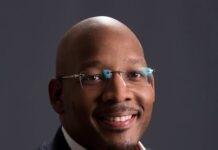
As a proud St. Martiner with deep roots on both sides of this island, I take no pleasure in reaching this conclusion. I was raised with an independent mindset, to believe in hard work, personal responsibility, and our ability to determine our own future.
That is precisely why I believe it is time to ask a difficult question.
Should the people of Sint Maarten once again determine their constitutional future?
More than twenty-five years have passed since the constitutional referendum of 2000, and anyone willing to honestly assess the results must acknowledge that Country Status within the Kingdom has not delivered what was promised by our leaders to leave the Netherlands Antilles.
Many argue that Sint Maarten is still a young country and therefore deserves more time. While there may be some truth to that argument, it offers little comfort or hope for our people in the present.
As an Engineer trained to assess and solve problems, I am forced to conclude it is time to demand a constitutional referendum.
The options should be placed before the people once again:
- Remain a Country within the Kingdom.
- Pursue independence.
- Become part of the Caribbean Netherlands as a BES island.
In 2000, I voted to remain within the Netherlands Antilles. Today, after witnessing the realities of governance firsthand as a former Member of Parliament, I would vote for BES status.
Not because I believe Sint Maarten lacks talent.
Not because I believe our people are incapable.
But because vote buying has poisoned our democratic process, discouraging many capable individuals from entering politics, the Lynch law has amplified individualism in our politics. Our Members of Parliament and Ministers, too often, are controlled by outside interests and political financiers, while our institutions have repeatedly demonstrated an inability or unwillingness to implement the reforms necessary to improve quality of life.
It is time we go back to a simpler form of government similar to the Island Council days when our island saw prosperity.
A BES structure would simplify governance, strengthen oversight, improve tax compliance, enhance healthcare and public services, and provide greater resilience against economic shocks.
Most importantly, it would force many of the reforms we have spent years discussing but never fully implementing.
Some people will see this conversation as surrender. Others will frame it as a matter of race, identity, or national pride.
I see it as a conversation about results and better quality of life for our people.
The average citizen does not care about political slogans. They care about the roads they drive on, the cost of electricity, the quality of healthcare, the efficiency of government services, and the opportunities available to their children.
That is what matters.
It is time for a new constitutional referendum for Sint Maarten.