



















Dear Editor,
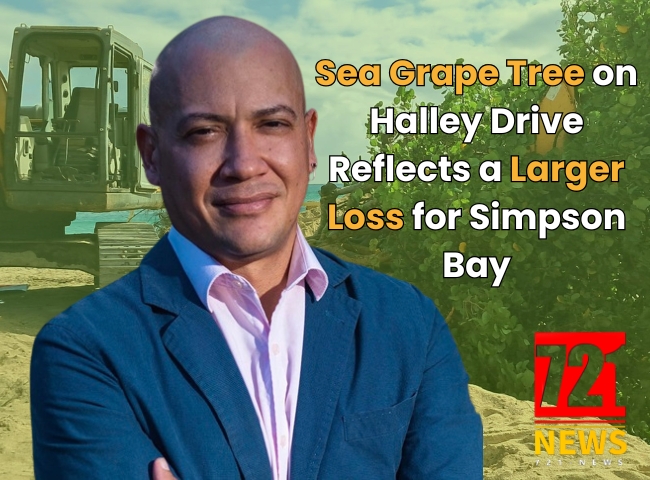
Like many in the community, I was saddened to see the destruction of the beautiful sea grape tree on Halley Drive in Simpson Bay. As I watched members of the Simpson Bay community protest during a Facebook Live broadcast, I listened to residents speak with frustration and heartbreak about what was taking place. One resident stated, “Simpson Bay was not supposed to be Miami.” Another stood beside the damaged tree and said, “Look at our roots. They’re digging us out of the system.” Those words captured exactly what many residents have been feeling for years as Simpson Bay continues losing pieces of its identity through unchecked overdevelopment and the steady disappearance of natural spaces.
In 2022, I met with members of the Simpson Bay community and discussed the importance of ensuring that this tree remained intact. The sea grape tree carried cultural significance, ecological importance, and deep value to the surrounding community. For many residents, it formed part of the identity and landscape of Simpson Bay and remained one of the few natural landmarks left within an increasingly developed area. Children climbed the tree, played beneath it, and gathered around it in ways that have become increasingly uncommon during a period where screens and indoor living dominate daily life. Mature trees contribute far beyond aesthetics. They provide shade, support biodiversity, reduce temperatures, stabilize soils, assist with stormwater absorption, and maintain continuity within rapidly changing neighborhoods.
Residents protesting on site stated that commitments had been made that the tree would not be touched. Days later, the public was informed that the damage was “accidental.” Based on the footage and the visible excavation around the root system, I do not believe there was anything accidental about it.
What has taken place on Halley Drive reflects a broader issue that extends far beyond a single tree. Simpson Bay has increasingly become an example of how aggressive development, when not balanced properly with community interests and environmental considerations, can gradually erode the character of an area. Residents continue raising concerns, attending meetings, submitting objections, and asking for greater consideration of the long-term impacts these projects have on their community, only to watch developments continue moving forward.
The gradual loss of green spaces, mature trees, drainage areas, and community character in Simpson Bay should serve as a warning for the rest of St. Maarten. Once these environmental and social buffers disappear, they are extremely difficult to restore. Communities become hotter, more flood-prone, more congested, and less resilient during storms and heavy rainfall events.
The existing Tree Policy already recognizes the importance of mature and historic trees because of their environmental, cultural, landscape, and historical value. Historic tree assessments conducted on St. Maarten identified hundreds of significant trees throughout the island, including concentrations within Simpson Bay. Sea grape trees themselves were identified among the most common Class I historic tree species documented during these assessments.
Removing mature trees from coastal communities weakens resilience at a time when St. Maarten should be strengthening it. Sea grape trees help reduce erosion, stabilize shorelines, provide habitat for wildlife, reduce heat buildup, and act as natural wind barriers during storms. In a country still recovering from Hurricane Irma while facing worsening climate threats, the destruction of mature trees reflects extremely short-sighted development practices.
This situation reinforces the need for stronger environmental legislation and clearer development safeguards. Policies such as the Tree Policy, Hillside Policy, and Beach Policy should eventually be supported through enforceable legislation, including proper Environmental Impact Assessment requirements for major developments. Developers should be required to demonstrate how projects will avoid, minimize, or mitigate environmental and community impacts before approvals are granted.
Residents should not have to stand in the street protesting to protect one of the few remaining mature trees within their community.
The sea grape tree on Halley Drive represented part of the environmental and social fabric of Simpson Bay. Its destruction should encourage a broader national discussion about what kind of development St. Maarten wants moving forward and whether communities are truly being included in that vision.
If Simpson Bay continues down this path unchecked, it risks losing the very identity that made people want to live there in the first place. That should concern all of St. Maarten.
Tadzio Bervoets