














PHILIPSBURG / ARUBA — Member of Parliament Sjamira D. M. Roseburg, who was invited to Aruba last week Thursday in her capacity as a criminal defense lawyer to participate in the conference “Psychiatric and Psychological Assessments and Reports: Entrance to Forensic Care in the Caribbean V,” used the opportunity during her stay to further explore youth development initiatives that may benefit Sint Maarten.
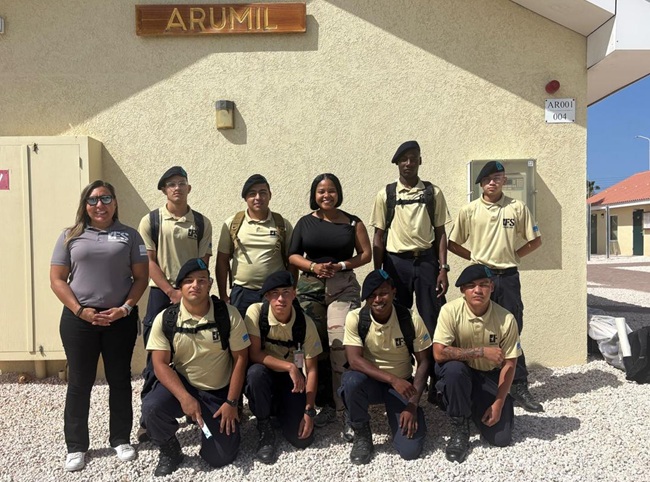
While in Aruba, MP Roseburg took time on her own initiative to revisit the Social Formation Traject (SVT) program, an initiative she has been closely following and championing as a potential model for youth development. The visit allowed her to gain a deeper understanding of how the program operates in practice and how its structure could potentially benefit young people in Sint Maarten.
During the visit, MP Roseburg spoke directly with several participants currently enrolled in the program, hearing firsthand about their experiences and the impact the traject has had on their personal development. She also held discussions with the leadership of the SVT program to continue exploring the possibility of collaboration between Aruba and Sint Maarten, particularly regarding whether young people from Sint Maarten could potentially participate in the program in the future.
The SVT program in Aruba has demonstrated significant success since its establishment in November 2011. To date, the program has organized 21 groups consisting of 19 groups of young men and two groups of young women. Approximately 155 participants have successfully completed the full traject. The program focuses on discipline, structure, mentorship, and life skills development and aims to provide young people with the tools necessary to redirect their lives and build productive futures.
Several success stories from the program further highlight its impact. According to program officials, a number of participants who completed the SVT traject later went on to join the military and successfully completed military training programs. Others used the discipline and skills gained through the program to enter job training opportunities through the
military and later secured employment at the same institutions where they trained. Some former participants have even gone on to receive recognition such as Employee of the Month at their workplaces. These achievements include both male and female participants, and today women who once participated in the SVT program are now serving in the Aruban military.
Officials also indicated that the SVT facility is currently not operating at full capacity, which could potentially create opportunities for collaboration should Sint Maarten wish to explore the possibility of utilizing the program as part of broader youth development efforts.
MP Roseburg noted that initiatives such as the SVT program demonstrate how structured guidance, mentorship, and discipline can play an important role in helping young people redirect their lives and build meaningful careers. She emphasized that understanding successful regional models is important when examining possible approaches to addressing youth challenges in Sint Maarten.
In light of the positive outcomes demonstrated by the program, MP Roseburg also noted that there may already be possibilities within Sint Maarten’s existing legal framework to support initiatives such as the SVT program. In particular, she pointed to the objectives of the Crime Fund, which is established under local legislation to finance projects that contribute to crime prevention and the strengthening of the justice system.
Under the provisions governing the Crime Fund, financial resources generated from criminal penalties and the sale of confiscated or forfeited goods may be used to support projects aimed at combating crime and preventing individuals from becoming involved in criminal activity.
According to MP Roseburg, programs such as the Social Formation Traject strongly align with these objectives. The program focuses on discipline, mentorship, structure, and life skills development, all of which play a critical role in guiding young people away from negative influences and helping them build productive futures.
By providing young people with structure, mentorship, and opportunities for personal growth, programs like the SVT traject can serve as an important preventative tool. Preventative initiatives aimed at youth development are widely recognized as one of the most effective ways to reduce long term criminal involvement and strengthen communities.
Given this alignment with the goals of crime prevention, MP Roseburg indicated that it may be worthwhile to explore whether the Crime Fund could potentially be used to support participation in, or collaboration with, programs such as the SVT traject.
She noted that investing in preventative programs that guide young people toward discipline, education, and employment opportunities can ultimately reduce the social and financial costs associated with crime in the long term.
To further explore this possibility, MP Roseburg confirmed that a formal letter has been submitted to the Minister of Justice requesting clarification on whether resources from the Crime Fund could legally be utilized to support such youth focused preventative initiatives.
According to MP Roseburg, examining this option forms part of a broader effort to explore practical solutions that strengthen youth development while making use of existing legal mechanisms aimed at preventing crime and promoting safer communities.
The discussions held during the visit were exploratory in nature and focused on gathering insight into how such a program could potentially complement existing youth development efforts on the island. According to MP Roseburg, the positive outcomes seen in Aruba highlight the value of investing in programs that provide young people with opportunity, structure, and support, elements that could also benefit the youth of Sint Maarten.