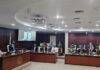




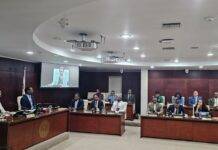









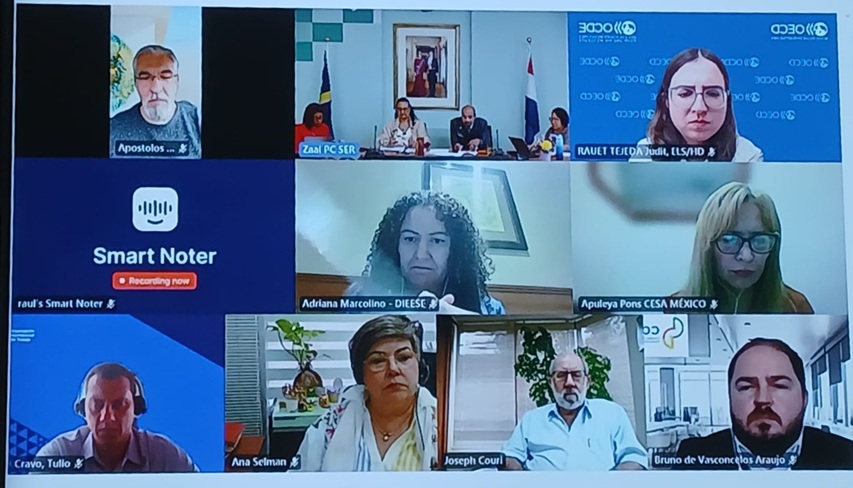
WILLEMSTAD — Latin America and the Caribbean are aging faster than their healthcare systems, pension provisions, and labor markets can keep up with. That was the clear message on Wednesday, March 25, during a virtual regional meeting led by the Social-Economic Council (SER) of Curaçao, which serves as vice-secretary-general for Latin America and the Caribbean of the International Association of Economic and Social Councils and Similar Institutions (AICESIS).
For the SER of the Leeward Island, the meeting directly connected to its ongoing advisory initiative on aging, healthcare and elderly provisions, and ‘Happy Aging’ from a socioeconomic perspective. Representatives from the Dominican Republic, Brazil, Honduras, Mexico, Peru, Costa Rica, Paraguay, and El Salvador participated in the discussions.
One conclusion ran as a common thread throughout the meeting: without closer regional cooperation, the consequences of aging, persistent informal labor, and growing pressure on healthcare and pension systems will be difficult to manage. According to participants, priority in the coming years must go to reforming pension systems, strengthening the care economy, and promoting intergenerational solidarity. Aging was not approached as an isolated healthcare issue, but as a broad socioeconomic challenge touching on labor, income, public finances, and social cohesion.
The Organization for Economic Co-operation and Development (OECD) outlined during the meeting how demand for long-term care is growing and why informal caregivers and professional care providers need to be structurally better supported. The International Labour Organization (ILO) addressed the impact of digitalization and generative artificial intelligence (AI) on the labor market, highlighting risks such as further informalization, but also opportunities for higher productivity and more inclusive growth. Brazilian participants also shared their experiences on these themes, adding extra weight to the discussion: differences between countries are significant, but the underlying trend is visible across the entire region.
For the SER, the meeting confirms that sustainable answers can only be achieved through joint policy development and serious social dialogue. Aging cannot be addressed with isolated measures but requires coherent policy that looks beyond the short term.