













United Nations, New York — Today, 9 February 2026, marks 999 days of sustained international advocacy by James Finies, indigenous Bonairean human rights defender and leader of the Partido Pueblo Progresivo, within the international community and the United Nations system.
For 999 days, Finies has worked tirelessly to draw global attention to the fact that The Hague unilaterally removed Bonaire’s right to self-governance by imposing a Dutch constitutional structure—without respecting a referendum, democratic mandate, or the free, prior, and informed consent of the people. During this period, Finies has continued to highlight Bonaire’s unresolved political status and its human rights implications following the island’s unilateral incorporation into the Dutch constitutional structure in 2010.
Throughout this time, James Finies has actively participated in United Nations processes in New York and Geneva, engaged with diplomats, legal experts, civil society organizations, and international institutions, spoke at various official UN meetings, including General Assembly sessions, and contributed to side events, briefings, and formal advocacy initiatives. A central focus of this work has been the call to relist Bonaire on the UN list of Non-Self-Governing Territories, restoring international oversight and obligating the Dutch government to report transparently on Bonaire’s development.
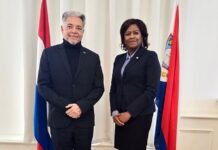
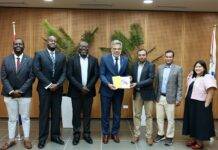
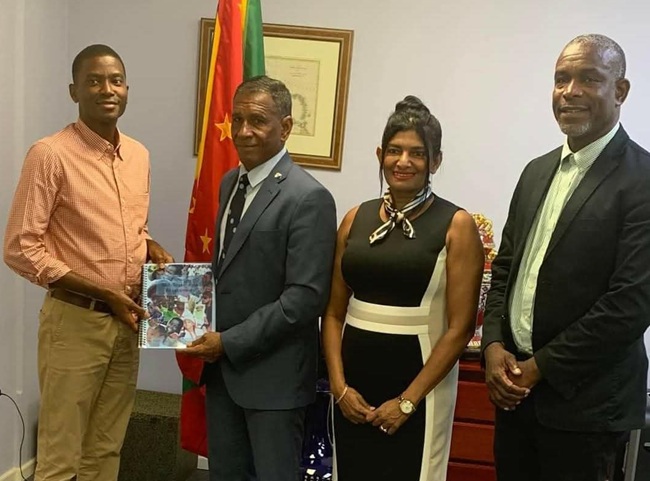
During these 999 days, James Finies has had direct contact, addressed, or held dialogues with Presidents from the Dominican Republic, Chile, Cuba, Panama, Suriname, and Guyana; Prime Ministers of Belize, Barbados, Bahamas, St. Kitts and Nevis, St. Vincent and the Grenadines, Grenada, Jamaica, and Trinidad and Tobago; Premiers of the British Virgin Islands, Anguilla, Montserrat, Bermuda, and French Polynesia; as well as Foreign Ministers and others.
He has also engaged with the President of the UN General Assembly, the UN Secretary-General, the NATO Secretary-General, and the Secretary-Generals of CARICOM and the Organization of Eastern Caribbean States (OECS).
Other historic milestones include solidarity received from regional organizations such as OECS, MERCOSUR, CARICOM, and PARLACEN, which has elevated Bonaire’s case within Caribbean, Latin American, and global diplomatic circles and confirmed that Bonaire’s situation is not an internal matter, but part of the ongoing global decolonization agenda.
“999 days is not a symbol—it is proof of persistence, responsibility, and resistance,” said James Finies, giving voice to a people who refuse to be invisible and demand that international law and UN mechanisms function as intended. Despite political pressure, marginalization, and personal risk, his advocacy reflects Bonaire’s broader struggle for self-determination, dignity, cultural preservation, climate justice, and a better quality of life, while calling on the international community to engage, listen, and act, as Bonaire’s situation remains unresolved.
James Finies sincerely thanks the people of Bonaire who continue to believe in him and gave hope, united by the shared hope of building a dignified and just future for children and generations to come, and by the conviction that relisting Bonaire on the UN list is the right thing to do under international law and principles of justice.