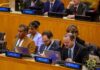



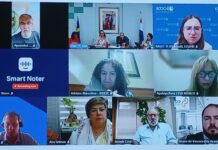
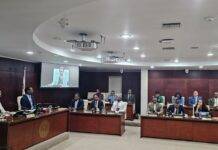









Trinidad & Tobago — On January 21, 2026, ParlAmericas convened parliamentarians from across the Americas for a groundbreaking conference in Trinidad focused on Technology-Facilitated Gender-Based Violence (TFGBV). Representing St. Maarten at this important regional dialogue were Member of Parliament Sjamira Roseburg and Member of Parliament Veronica Jansen-Webster.
The conference brought together female parliamentarians from Caribbean and Latin American countries including Antigua and Barbuda, Grenada, St. Lucia, Jamaica, Trinidad and Tobago, Curaçao, Belize, The Bahamas, and others. The objective was to deepen understanding of the rapidly evolving forms of gender-based violence enabled by digital technologies and to strengthen parliamentary strategies to address it.
The first session of the conference was moderated by MP Sjamira Roseburg and featured a keynote presentation by Candice Wallace of UNFPA Caribbean. The session presented the findings of a qualitative study conducted with current and former women in political office across the region. The study revealed a troubling reality: every woman interviewed had experienced one or more forms of technology-facilitated gender-based violence during her political career.
Key findings showed that online harassment frequently targeted women’s appearance, including comments about their hair, makeup, clothing, and body weight, as well as intrusive remarks about their personal lives. Many interviewees reported that such attacks intensified during election periods. The research further highlighted how deeply rooted patriarchal norms and structural gender inequality shape both the nature and persistence of TFGBV. Importantly, the study found that while TFGBV affects women across contexts—including incidents perpetrated by other women—many victims do not report cases to authorities. When reports are made, women often experience inadequate responses from law enforcement, leaving them to cope independently with emotional, professional, and psychological consequences, sometimes resulting in trauma or reduced public participation.
Parliamentarians reflected on how TFGBV poses a direct threat to democratic participation and accountability. Evidence demonstrates that women’s presence in parliaments leads to stronger advocacy for social development, women’s rights, family protection, and humanitarian legislation. The silencing of women through online abuse therefore undermines not only individual leadership but also democratic governance and legislative progress more broadly.

The second part of day one focused on actionable solutions. Discussions emphasized the importance of:
- Developing comprehensive communication strategies to raise public awareness about TFGBV;
- Strengthening legislative frameworks to clearly define, prevent, and penalize technology-facilitated abuse;
- Amending parliamentary codes of conduct to explicitly include protections against digital harassment; and
- Enhancing regional cooperation to share best practices and align legislative responses.
On the second day of the conference, parliamentarians engaged with young women aspiring to public office, exchanging perspectives on leadership and the barriers created by technology-facilitated abuse in political spaces.
MP Sjamira Roseburg had already begun amending legislation modeled on the Lei Olimpia framework, which establishes legal protections against digital gender-based violence. The Roseburg-led initiative seeks to modernize St. Maarten’s legal landscape to ensure victims of TFGBV have access to justice and support. The amendments will also incorporate relevant provisions of the December 2025 Draft Inter-American Model Law on Gender-Based Digital Violence (TFGBV).
Both MPs intend to present the outcomes of the conference and proposed legal amendments to the newly re-established Women’s Caucus in Parliament, followed by submission to the full Parliament of St. Maarten. In addition, they plan to collaborate with schools and youth organizations to promote digital safety, respect, and awareness of TFGBV among young people.
Although St. Maarten was not represented at the accompanying Caribbean youth conference, MPs Roseburg and Jansen-Webster used the opportunity to meet with the chairperson of the Caribbean Women’s Organization, who committed to supporting the establishment of a female youth chapter on the island to further empower young women and future leaders.
This important regional dialogue was supported by ParlAmericas and its partners, reinforcing the shared commitment of legislators across the hemisphere to confront technology-facilitated abuse and safeguard women’s full participation in democratic life.