













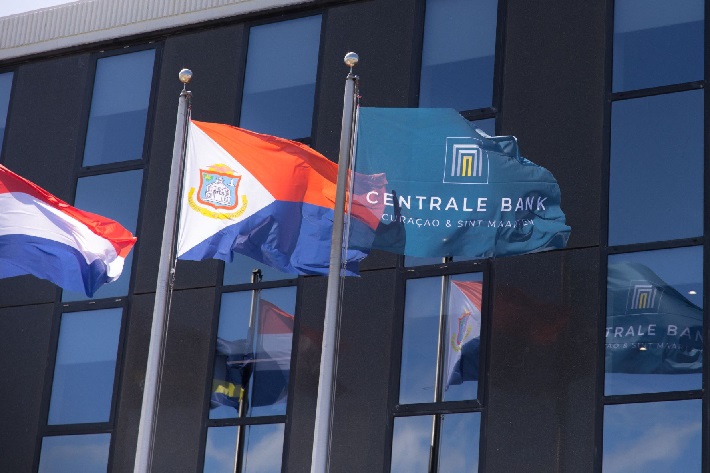
WILLEMSTAD / PHILIPSBURG – The monetary union experienced strong economic activity in 2025, driven by robust tourism performance. While economic growth in Curaçao and Sint Maarten is expected to continue over the forecasted horizon, both economies remain highly vulnerable to external shocks. As small, open and import-dependent island states, they remain sensitive to fluctuations in global demand and commodity prices, as well as to climate-related disruptions. These longstanding vulnerabilities are now amplified by rising geopolitical tensions between the United States and Venezuela in the region. “Maintaining stability in this environment requires decisive policy action to reinforce resilience and support a long-term sustainable growth path,” said Richard Doornbosch, President of the Centrale Bank van Curaçao and Sint Maarten, in the CBCS’s December 2025 Economic Bulletin.
Building resilience in the face of rising regional tensions
According to Doornbosch, an escalation of tensions between the United States and Venezuela could affect the monetary union through higher transport and insurance costs, weaker investor confidence, softer tourism demand and, for Curaçao in particular, renewed migration pressures. While moderate escalation scenarios would likely have a temporary impact, Doornbosch warns that more severe shocks like targeted operations by the United States on Venezuelan territory could generate longer-lasting effects as tourism exports decline more sharply, external financing weakens and official reserves fall. These findings underscore the need for continued vigilance in safeguarding reserve adequacy, monitoring external vulnerabilities, and maintaining investor confidence.
“To reinforce resilience, Curaçao and Sint Maarten must continue to strengthen their fiscal frameworks by building fiscal buffers and safeguarding debt sustainability, in line with international good practices for small developing states,” Doornbosch emphasized. Sound medium-term fiscal frameworks, anchored in realistic revenue projections, multi-year expenditure ceilings, and clear prioritization of resilient infrastructure are essential to preserve space for countercyclical actions when shocks materialize. “One important way to strengthen public financial management is to incorporate macroeconomic projections into the preparation of government budgets, thereby improving the alignment between fiscal planning and expected economic conditions and supporting a more efficient and credible budget cycle. The CBCS stands ready to provide the necessary analytical support to the authorities in this process,” he explained.
At the same time, a key domestic priority is to improve execution of the multi-annual public investment programs in both countries as persistent delays in public projects tend to postpone related private investments and weaken investor confidence. “Strengthening project preparation, procurement, and implementation capacity, including through greater use of digital tools and
technical assistance from international partners, would help ensure that planned capital spending translates into visible improvements in connectivity, service delivery, and resilience,” recommended Doornbosch. Parallel reforms to secure the long-term sustainability of health care and social insurance systems have become increasingly urgent, as demographic pressures and rising medical costs could otherwise crowd out productive spending.
Beyond sustainable public finance, strengthening resilience requires a more diversified and regionally connected economy to reduce dependence on a narrow set of sectors and markets. For example, opportunities exist to deepen bilateral trade between Curaçao and Trinidad and Tobago through a partial scope trade agreement that draws on each country’s comparative strengths. “Leveraging this by lowering tariff and non-tariff barriers on complementary products
or services, improving customs and standards cooperation, and supporting firms in meeting export requirements could broaden Curaçao’s export base, strengthen supply chains, and reduce vulnerability to shocks in more traditional markets,” he said.
Curaçao and Sint Maarten enter the new year with solid growth prospects, easing inflation and stronger external buffers, yet the outlook remains tempered by rising regional security risks, global trade uncertainty, and structural vulnerabilities. “Continued commitment to a focused policy agenda that addresses key vulnerabilities and structural challenges will be essential to reinforce
resilience and support a path of sustainable and inclusive growth across the monetary union,” he concluded.
The complete text of the December 2025 Economic Bulletin is available on the CBCS website.