














PHILIPSBURG, Sint Maarten – Several major critical infrastructure projects under the Emergency Recovery Project 1 (ERP-1) are nearing completion, strengthening Sint Maarten’s resilience in areas like energy, emergency communications, and weather monitoring.
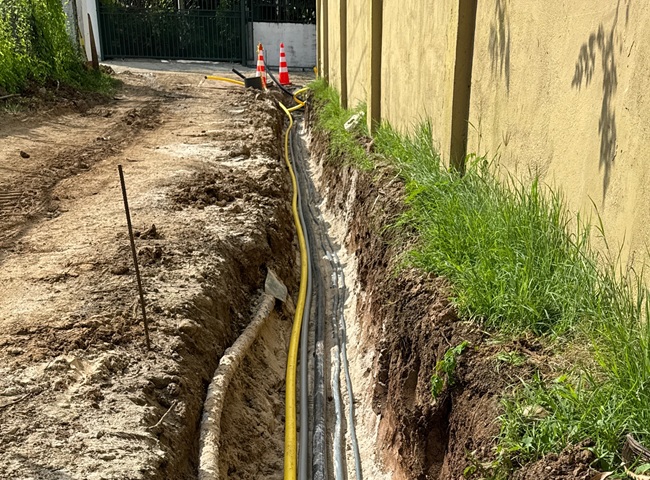
The USD$5.1 million underground cabling project with NV GEBE is now in its final stages. This work builds on the underground utilities project that began under ERP-1 in 2022. This activity installed low-voltage electricity lines and water pipes, below ground across large parts of the Cul-de-Sac basin. The 2022 works strengthened the base of the electricity network and created the conditions for the mid-voltage cabling upgrades now taking place.
The installation of underground cables, mid and low-tension power lines and new water distribution pipes is ongoing in Bishop Hill, Cole Bay, Dutch Quarter, Point Blanche and parts of South Reward; it is set to be complete by February 2026. By placing these power lines underground, the project reduces the risk of outages during hurricanes and makes the network more stable and easier to maintain. When the activity is complete, GEBE’s mid tension grid in Sint Maarten will be fully underground.
The installation of the Cell Broadcasting System is another major activity under ERP-1. This is a new emergency alert platform that will allow the Government of Sint Maarten to send real-time warnings directly to mobile phones during disasters. The system is now entering its final testing phase and will use existing telecom networks to deliver urgent safety information during storms, floods, or other emergencies.
The project also includes the installation of five automated weather stations, along with stand-alone rain and tidal gauges at various locations across the island. These systems will give the Meteorological Department continuous local measurements of rainfall, temperature, humidity, and wind. This real-time data will help the Meteorological department to share detailed weather conditions with the public and improve the precision of local forecasts. The weather stations will also strengthen how early warnings are developed and shared during severe weather events. The installation and training of staff is expected to be completed by February 2026.
ERP-1 is implemented by the NRPB on behalf of the Government of Sint Maarten. It is funded by the Sint Maarten Trust Fund which is financed by the Government of the Netherlands and managed by the World Bank.