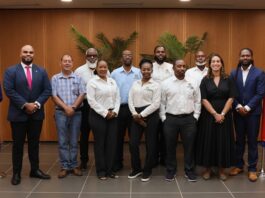
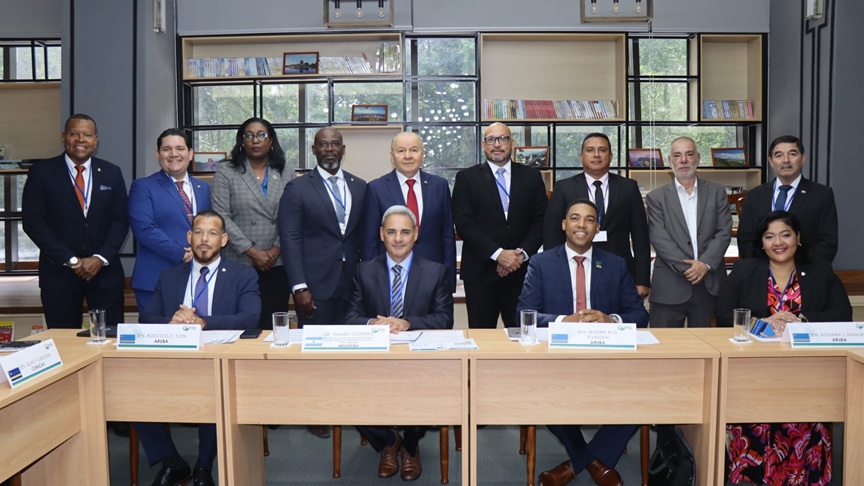
Panama – The president of the Latin American and Caribbean Parliament (PARLATINO), deputy Rolando González Patricio, formally installed the work of three of the thirteen Permanent Commissions of the Organization, which meet at its permanent headquarters in Panama City. These are the Education, Culture, Science, Technology and Communication commissions; Labor Affairs and Social Security; and Citizen Security, Combat and Prevention of Drug Trafficking, Terrorism and Organized Crime, whose debates address some of the main contemporary challenges facing the region. The installation was accompanied by the presidents of the commissions, Deputy Ramiro Gutiérrez and Deputy Amin Nifouri, as well as Elías A. Castillo G, executive secretary of the Agency, and more than 40 parliamentarians from different countries in the region, speakers and special guests.
The Citizen Security Commission, chaired by Congressman Ramiro Gutiérrez, focused its agenda on the analysis of regulatory frameworks linked to internal security, human trafficking, drug trafficking, arms trafficking and terrorism, as well as the exchange of experiences on democratization, transparency and control of government intelligence systems. The session included the participation of Carolina Brill, senior regional specialist in Protection and Assistance to Migrants of the Regional Office for Latin America and the Caribbean, and Verónica Durand, sociologist specialized in public security policies. Among the working agreements was the preparation of a regional Declaration and the preparation of Model Laws aimed at the democratization and control of intelligence systems, as well as the cyber protection of Member States and their societies.
For its part, the Committee on Labor Affairs and Social Welfare, chaired by Deputy Amin Nifouri, featured a presentation by Julio Croci, regional Policy and Liaison Officer of the Regional Office for Latin America and the Caribbean of the International Organization for Migration (IOM), who addressed the structural problems of social security, such as population aging, labor informality and the deficits of contributory systems. The commission’s agenda also included a broad debate on decent work, with emphasis on the reduction of working hours, the gender wage gap, informality and youth employment.
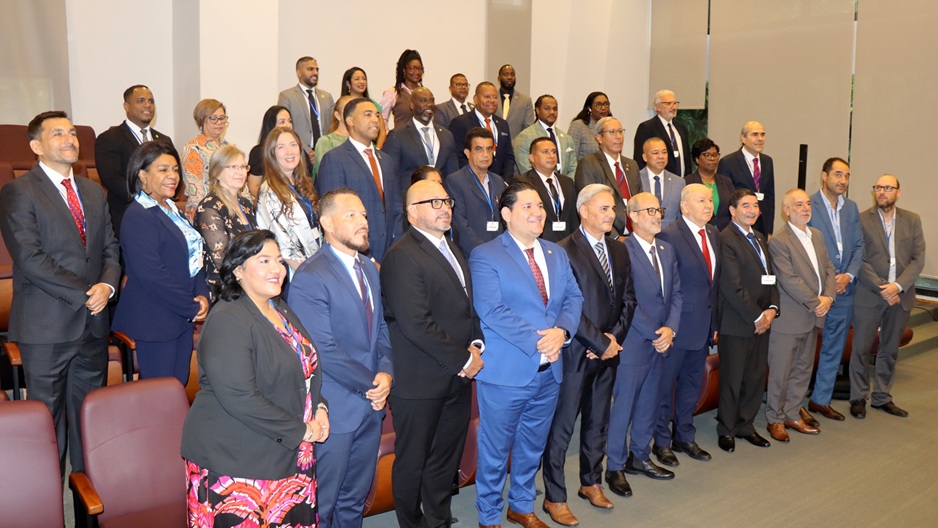

On the other hand, the Commission on Education, Culture, Science, Technology and Communication, chaired by Representative Lilia Batista, analyzed the progress of the Declaration for the Right to a Creative School, with presentations by Dr. Marlene Zwierewicz, deputy coordinator of the International Network of Creative Schools (RIEC), and by Dr. Verónica Violant, from the University of Barcelona and director of the International Observatory on Hospital Pedagogy.
The agenda of the first day of work was complemented with presentations on educational and entrepreneurial strategies against regional inequalities, by Dr. Mario Javier Pacheco and a visit to the Technological University of Panama. They will continue their work with the debate on a proposed regional agenda for the promotion of science and technology, presented by Dr. Lucía Nitsch Velásquez and the presentation of the Model Bill on Health and Emotional Education that will be presented by Verónica Violant and Arnaldo Canales.
The work agendas developed by the commissions that meet on May 7 and 8 at the PARLATINO headquarters reflect the Organization’s commitment to a cutting-edge legislative agenda, aimed at building consensus, developing regional regulatory frameworks and strengthening public policies that respond effectively to the needs of the people of Latin America and the Caribbean, reaffirming its vocation as a permanent space for dialogue, cooperation and parliamentary integration.