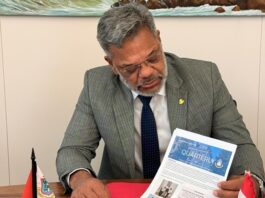
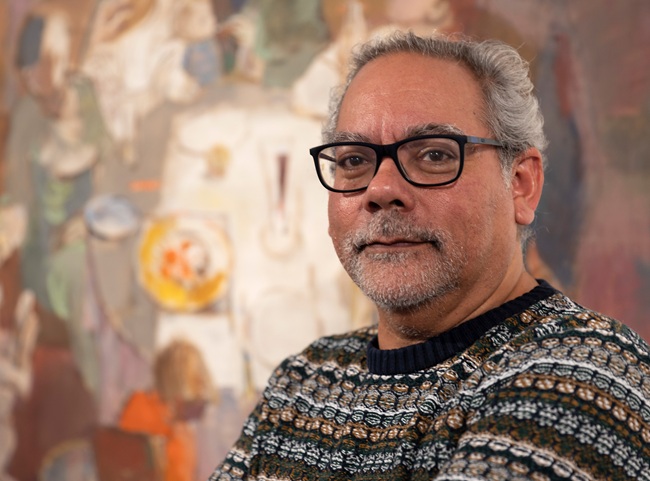
The board of the Slavery Memorial Committee Foundation announces that Mr. Paulo Martina will take over as the organization’s new director effective May 1st, 2026.
Astrid Elburg, chair of the board of the Slavery Memorial Committee: “With Paulo Martina, we have someone on board who, like the rest of our team, is an expert and highly competent. He is also solution-oriented and shares our vision of contemporary reality and the future.”
Paulo Martina was born in Curaçao in 1964 and moved to the Netherlands at the age of twelve.
He has worked in the arts and culture sector for thirty years and has been the director of the Zutphen Museums since 2023. He also presents the television program ‘Nu te Zien!’.
Martina previously served as director of the Van Bommel van Dam Museum in Venlo for over four years and as director of Museum Dr8888 in Drachten for ten years. He also has extensive experience in advisory and management roles within the cultural sector, including as an advisor to the Boekmanstichting and as a member of the Groningen Arts Council advisory committee.
Paulo Martina: “Because of my own background, I feel an intrinsic connection to the history of slavery. This makes me extra motivated to use my knowledge and experience for the Slavery Memorial Committee. Because of my roots, I am deeply connected to the people and the issue.”
Martina’s credo is that everyone has the right to know their own history. A history with which you can identify, which helps you better understand yourself, others, and your surroundings. Awareness is key.
The history of slavery is part of our shared history. By raising awareness of this shared past, you work towards healing in the present and enabling a shared future. By encouraging research, education, and dialogue about the history of slavery, you increase societal awareness of its impact. Listening carefully is a prerequisite for collaborating with affected communities and civil society organizations within the Kingdom of the Netherlands and Suriname.
I look forward to working with all the committees, Ninsee, the National Slavery Museum, and the national government. As Astrid Elburg, chair of the committee, puts it: “Shoulder to shoulder, we are working towards a resilient future.”