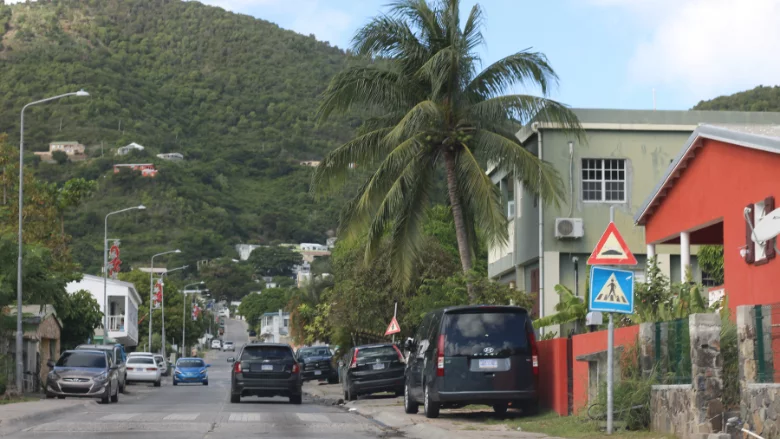
It was close to midnight in Philipsburg, Sint Maarten, when Lauren’s mother started struggling to breathe. Lauren called for an ambulance, gave her address, and waited by the door. Ten minutes passed. Then thirty. No signs of an ambulance. When her phone finally rang, the paramedics said they were outside, but when Lauren stepped out, the street was empty.
They were in the wrong place.
On the island, addresses aren’t consistent across government systems—what’s listed under one department, like the Kadastre, often doesn’t match the records held by emergency services or the Civil Registry. For the ambulance crew, the location matched the address in their database. For Lauren, it didn’t. Over the phone, she guided them turn by turn until they finally arrived. Thankfully, her mother survived. But for Lauren and her family, the memory remains terrifying.
Across Sint Maarten, a small island of just over 42,000 people, similar gaps appear in different forms. In 2018, the government experienced a significant cyberattack that crippled its systems, causing government buildings to shut down for over a week. During the COVID-19 lockdowns, services that relied on in-person interactions were halted, leaving citizens unable to access many government functions.
These moments all point to the same vulnerability: weak digital foundations – where data isn’t shared, systems aren’t secure, and public services can’t adapt when the unexpected happens.
That is the reality Sint Maarten lives with today—and the one it’s now determined to change.
In recent years, the government has begun laying the groundwork for a digital transformation, recognizing that resilience in a small island can’t rely on physical infrastructure alone. It also depends on systems that work seamlessly behind the scenes—linking data, protecting information, and making life easier for citizens and businesses.
This commitment is taking shape through the Digital Government Transformation Project (DGTP), an effort to strengthen the country’s digital foundations: connecting ministries, modernizing core systems, and creating tools for faster, safer, and more transparent public services.
At its heart, DGTP is about simplifying how government works every day—helping citizens access documents faster, allowing entrepreneurs to open businesses without endless paperwork, and creating digital foundations for more jobs and economic opportunities.
Already, fiber-optic lines link critical departments, replacing unreliable microwave connections. Thousands of paper records—from birth certificates to land titles—are being digitized. The new Address Registry will finally ensure that every home and business can be found on a single, unified map. And more than 400 civil servants have been trained in cybersecurity, building the first line of defense against future attacks.
In the months ahead, work will advance on developing secure digital identity tools and launching new online services so citizens and businesses can access government information, register companies, and apply for permits without visiting multiple offices.
“Sint Maarten is showing what’s possible when small states invest in digital foundations,” says Bernard Myers, Senior Digital Specialist and Task Team Leader.
“This isn’t just about government efficiency—it’s about giving citizens and businesses the tools to grow, create jobs, and compete in a digital world. Every new digital service, every skill gained, makes life a little easier and opens doors for innovation and new economic opportunities.”
A National Effort
Digital transformation is now gaining momentum at the highest levels of government. In a recent op-ed, Prime Minister Luc Mercelina underscored that digital resilience is a national priority—one tied directly to economic recovery, preparedness for hurricanes, and building trust between citizens and the state.
His message was clear: digital transformation is not a technical upgrade. It is a nation-building project. That leadership is helping ministries align around shared goals—from creating reliable data systems to enabling online services that save time for both citizens and government.
But the momentum is not coming from the government alone.
Across the island, residents and businesses are beginning to reflect on what a more digital Sint Maarten could mean for their daily lives – even if the benefits are not always obvious yet. As Edsel Gumbs, a business owner and Sint Maarten resident, explained:
“I am tired of going from one department to another giving the same documents over and over. If all our systems were connected digitally, it would make life easier not just for us—but also for the people who work in those entities.”
For residents, digital transformation is also part of a bigger vision: “Digital connectivity is how a small island competes globally. It gives entrepreneurs reach, workers new skills, and youth a future powered by opportunity. That is my vision: a Sint Maarten that is fully digital and fully connected to the world,” says Lionel Browne, a student at the University of Sint Maarten.
Voices like these reflect both the everyday frustrations digital reforms aim to solve and the long-term opportunities they can unlock for the island.
Step by step – one system, one skill, one fiber line at a time – Sint Maarten is building the digital foundations needed for growth, resilience, and long-term competitiveness.